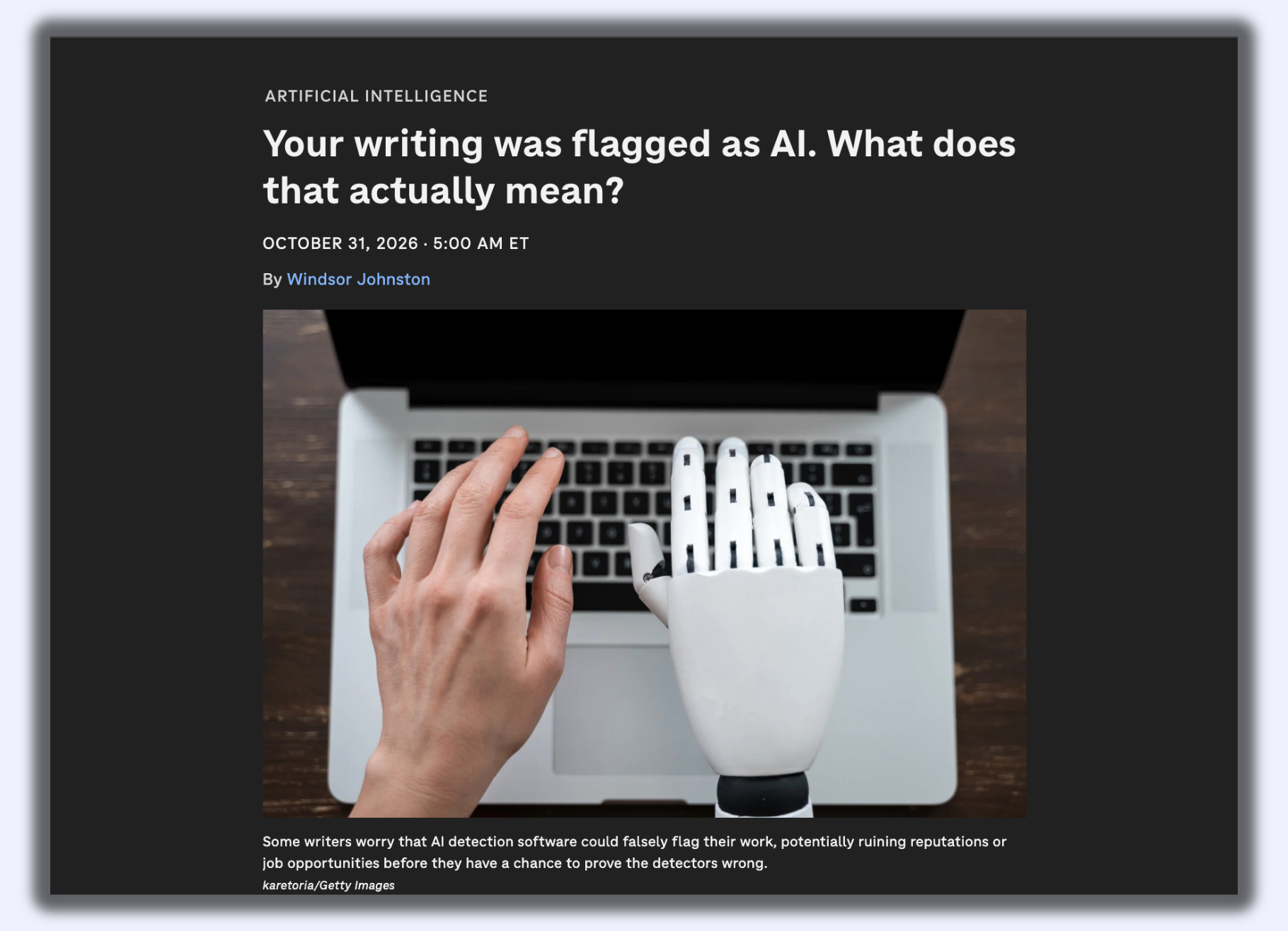
A ghostwriter believes an AI detector cost her a book proposal job.
Her name is Sally McGraw.
She says she didn’t use AI.
A prospective client ran her writing sample through several detection tools, and they flagged it as machine-generated.
NPR told her story on October 31.
She now avoids certain words, sometimes leaves out commas she used to include, and has given up the em dash she learned in journalism school.
She is changing how she writes to prove she is human.
If you write for money, a grade, or an audience, this can happen to you.
Today I’ll show you what these detectors look for, why honest writing can trip them, and the system I use to prove every word I publish is mine.
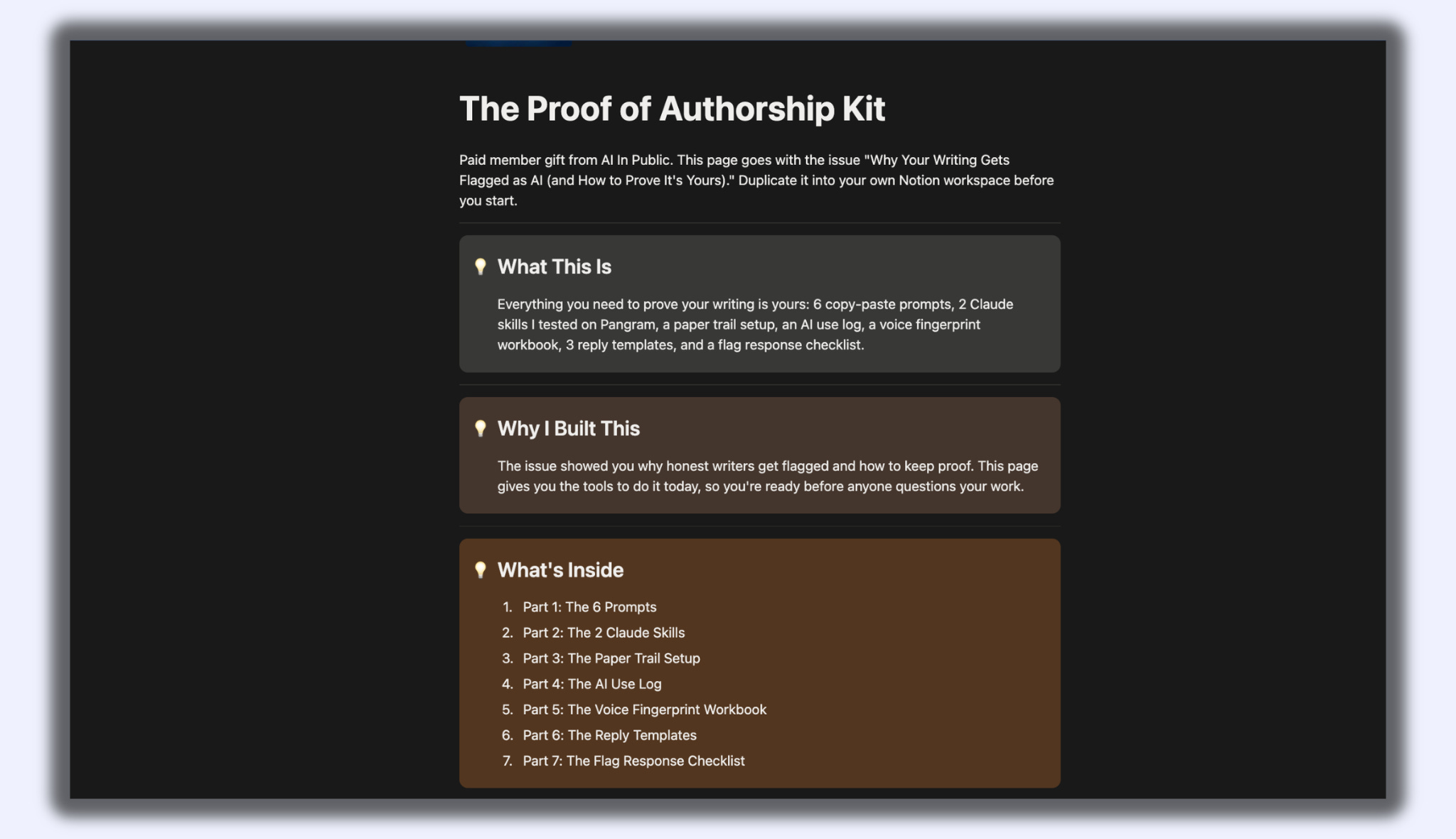
At the end of this issue, paid members get The Proof of Authorship Kit:
→ 6 copy-paste prompts that help you humanize AI-assisted drafts in your own voice and prove your writing is yours.
→ → 2 Claude skills I tested on Pangram, for a first pass before you rewrite.
→ The paper trail setup and AI use log template I keep for every piece.
→ Ready-to-send replies for the day someone says “a detector flagged your work.”
It’s waiting for you at the bottom.
100% HUMAN CONTENT
And if you want to make your content 0% AI, then you must read this issue. In this issue, I write about every short step to make the content 100% human.

Why I Care About This One
I use AI every day.
That’s what this newsletter is about.
I also write, and my stories, opinions, and mistakes belong to me.
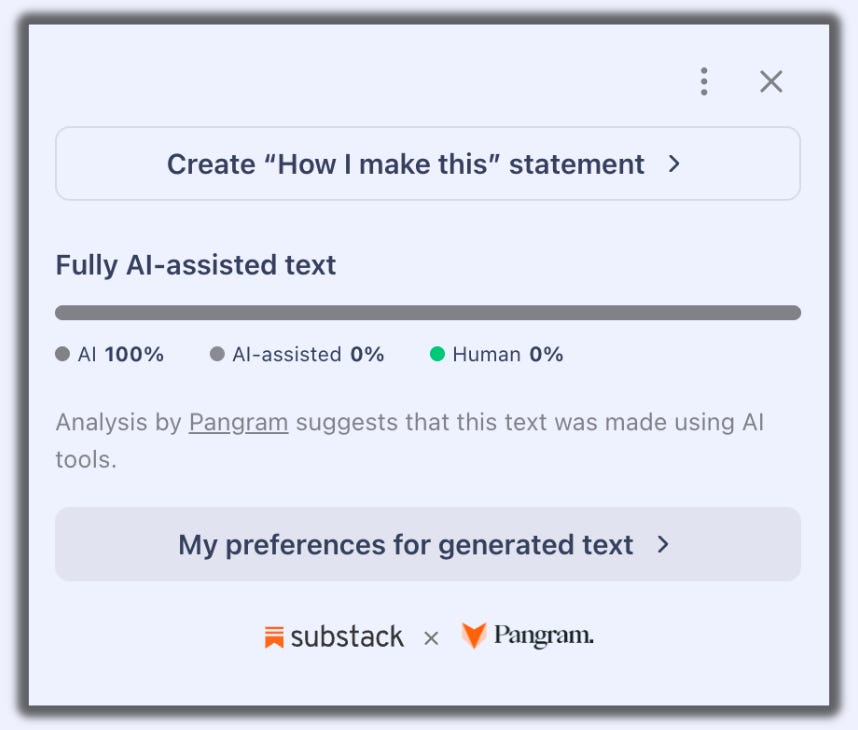
On July 21, Substack added Pangram’s AI detection, so anyone can now scan any post on this platform, including mine.
What You’ll Walk Away With
By the end of this issue, a detector score won’t scare you.
You’ll know what the tool measures.
You’ll have a version history that shows how you built each piece, an AI use log that records where AI helped, and a calm reply ready to send if someone questions your work.
You can keep writing the way you write.
You’ll have receipts.
The Proof: This Is Already Happening
Here’s what’s been reported in the last few weeks.
A novel got pulled. In March, Hachette withdrew Mia Ballard’s horror novel Shy Girl after Pangram scored it 78.3% likely AI. Ballard denies writing it with AI and says an editor she hired used it. Bloomberg reported on October 30 that Pangram gave the first chapter of her next book, Poly, a 100% AI score. She says she wrote that one by hand.
Prize winners got flagged. Four of the ten regional winners of the 2025 and 2026 Commonwealth Short Story Prize were flagged as AI by Pangram, according to the Financial Times. The Commonwealth Foundation reviewed the work without using any AI detector.

Writers are breaking their own style. Bloomberg found authors and students removing em dashes, avoiding the word “delve,” and adding typos on purpose so their work reads as human.
Writers here are testing themselves. Katharine English ran an original story through Pangram and got 31% AI. She tweaked the flagged passages and ran it again. Her score nearly doubled.
Every writer above found out after the damage was done. Subscribe and stay a step ahead of the next detector change.
Step 1: Understand What the Detector Is Doing
Pangram is a model trained on huge sets of human and AI writing.
The company says it built its detector on human text written before 2021, so the model learned what people wrote before chatbots existed.
When you scan a piece, Pangram splits it into segments and labels each one Human, AI-Assisted, or AI-Generated.
Then it gives the whole piece a percentage.
On Substack, any reader can run this scan on a post of 100 words or more.
Pangram doesn’t compare your text to a database of AI writing.
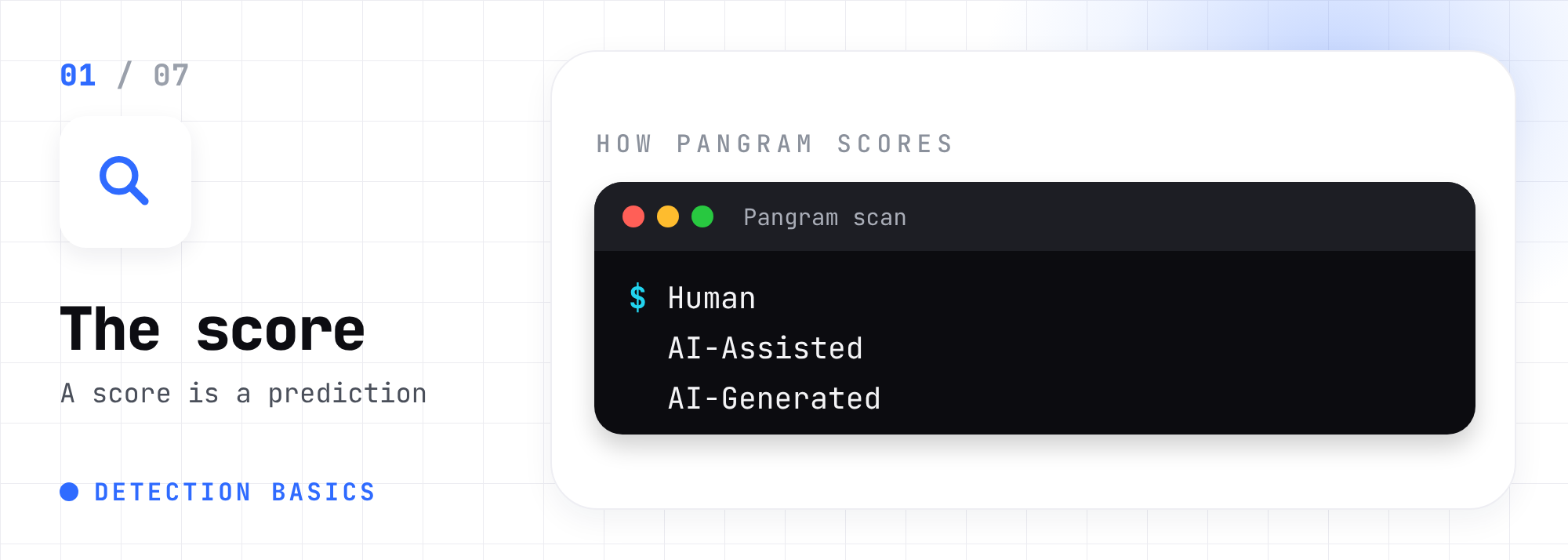
It predicts who probably wrote it, which is why Tim Requarth calls tools like this an “AI best guesser.”
A score is a prediction, not proof.

Step 2: Know the Patterns That Trigger It
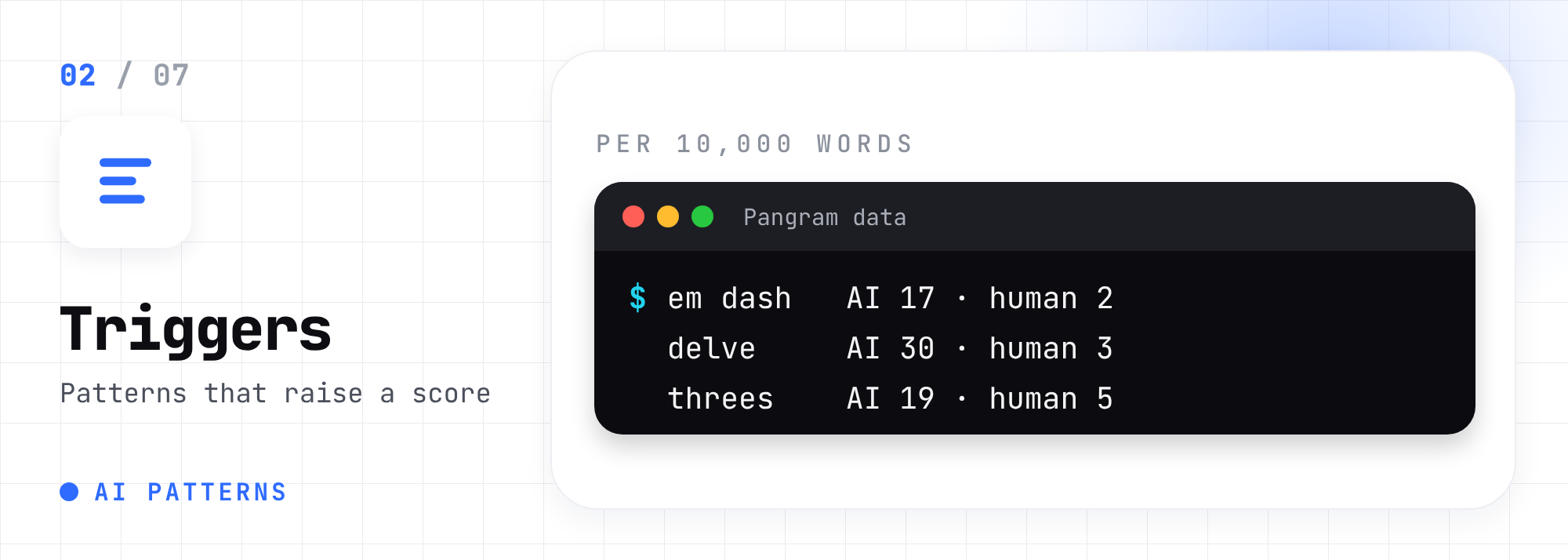
Pangram’s own data, reported by Bloomberg, per 10,000 words:
Em dashes: AI uses about 17, humans about 2.
“Delve”: AI uses about 30, humans about 3.
Ideas grouped in threes: AI about 19, humans about 5.
Pangram’s CEO Max Spero told NPR that openers like “notably” or “crucially,” and asking a question then answering it, can also push a score up.
Pangram weighs thousands of signals, so one em dash won’t flag you.
A very polished, list-heavy style can.
Step 3: Know Where Detectors Are Weakest
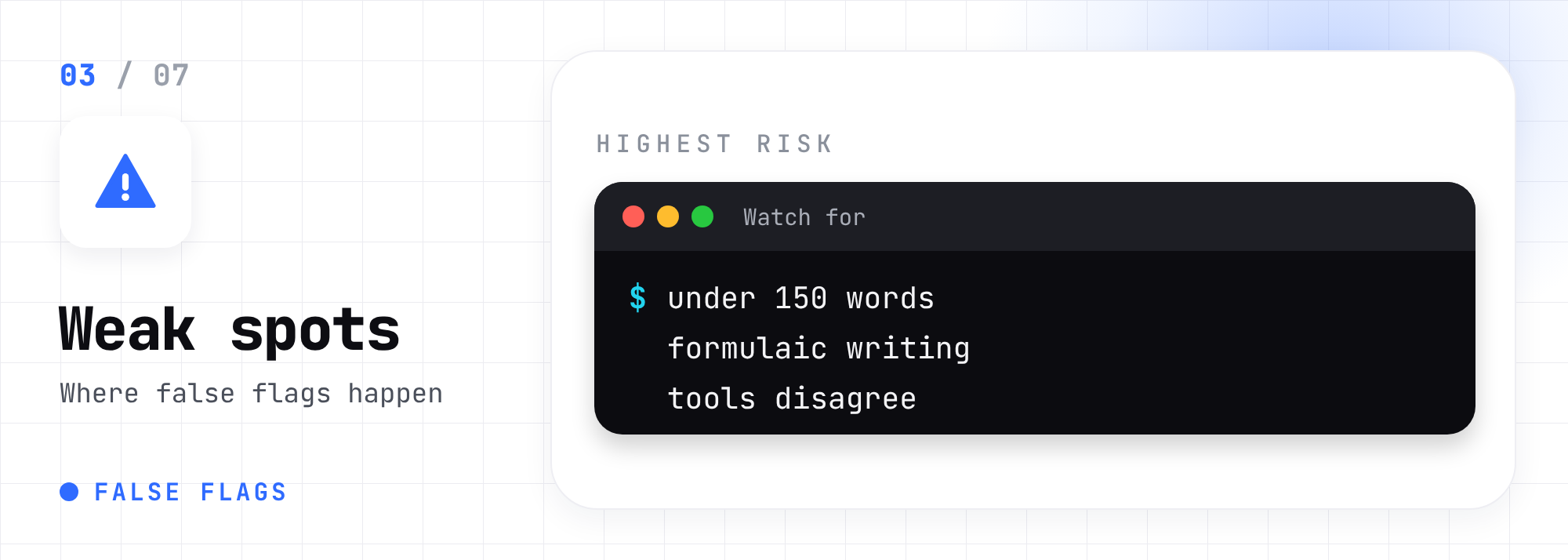
Short text. Spero told NPR the tool makes more mistakes when there isn’t much writing. Under 150 words is the danger zone.
Formulaic writing. Technical writing, templates, and tidy business prose look more like AI.
Different tools disagree. NPR reported that detectors can give very different scores for the same text.
Pangram is still the most accurate detector tested.
A June study in the International Journal for Educational Integrity found it beat three rivals on 160 papers.
Pangram claims it wrongly flags about 1 in 24,000 human documents, but across millions of posts and essays, real people still get hit.
Someone you know writes short pieces every day: bios, pitches, cover letters. Send them this before a detector finds them first.
Step 4: Build Your Paper Trail
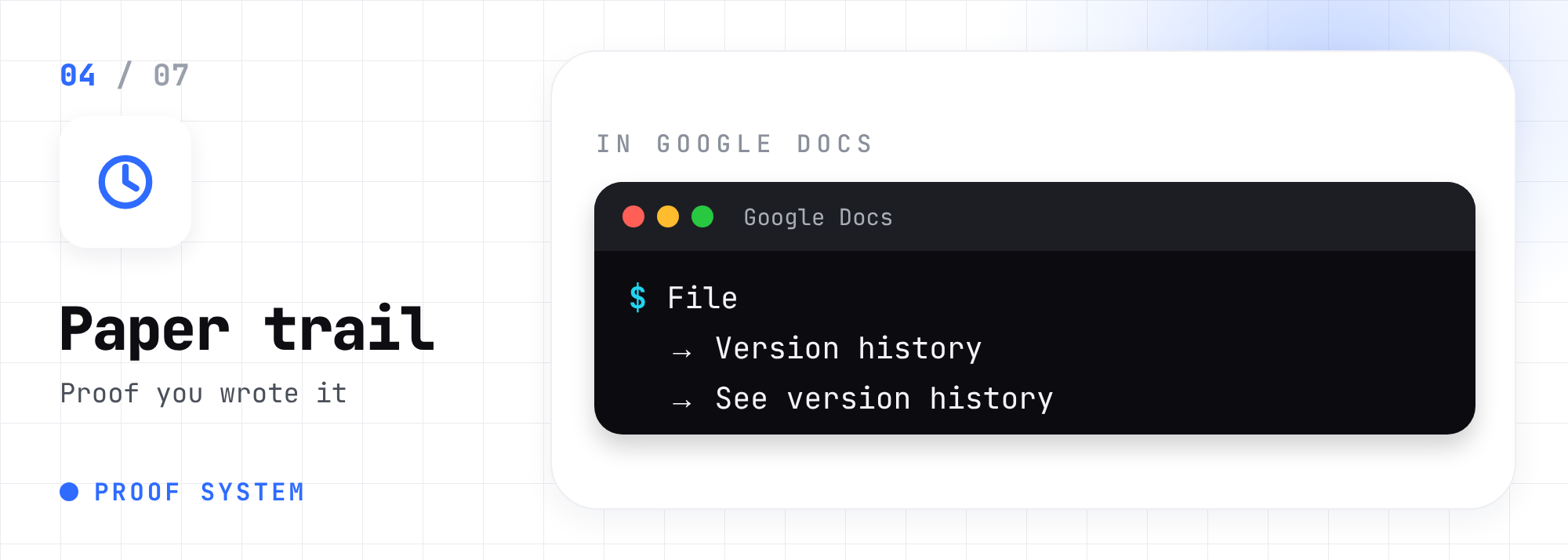
Write every important piece in Google Docs or Word on OneDrive.
Open File, then Version history, then See version history.
Click the three dots next to a version and choose Name this version.
Name versions as outline, first draft, and final edit.
Keep your notes and early drafts in the same folder.
Step 5: Keep an AI Use Log
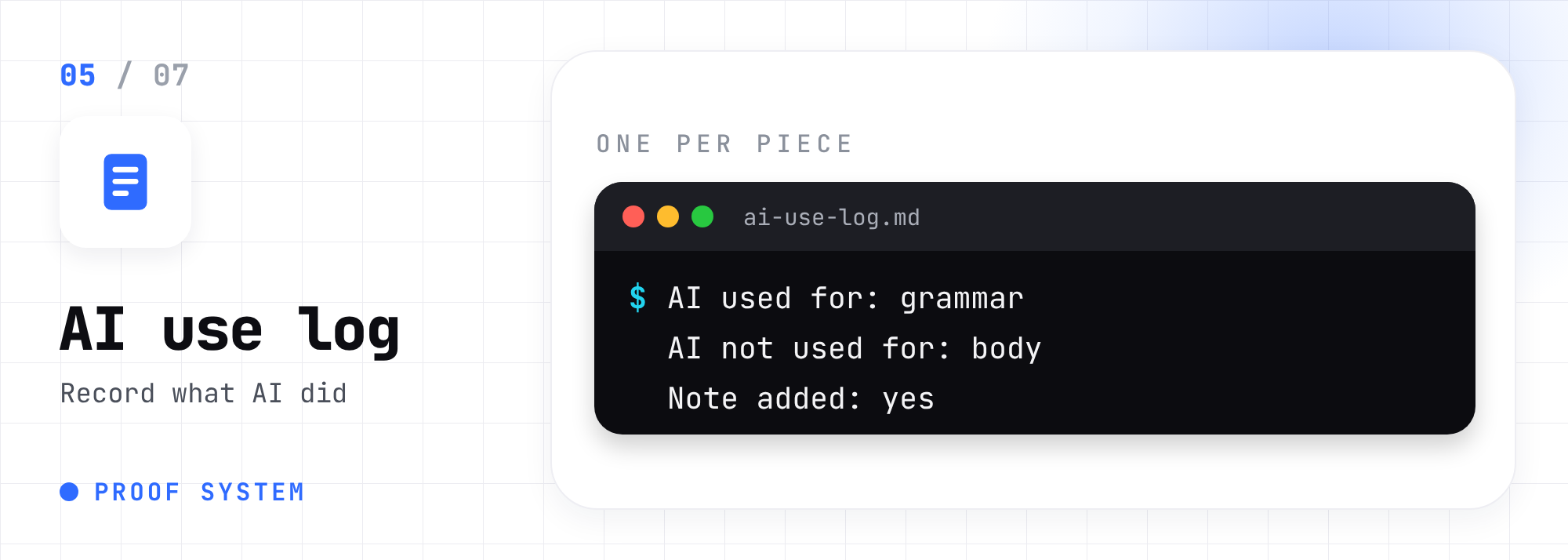
Pangram counts bullet points turned into an article by a chatbot as AI-generated, and your own writing rephrased by AI as AI-assisted.
Your log shows which one happened.
Piece: Client blog post, Nov 3 AI used for: Grammar check. Headline ideas (picked my own). AI not used for: Any sentence in the body.
On Substack, add the optional AI author’s note when AI drafted any part.
Step 6: Know What to Do When You Get Flagged
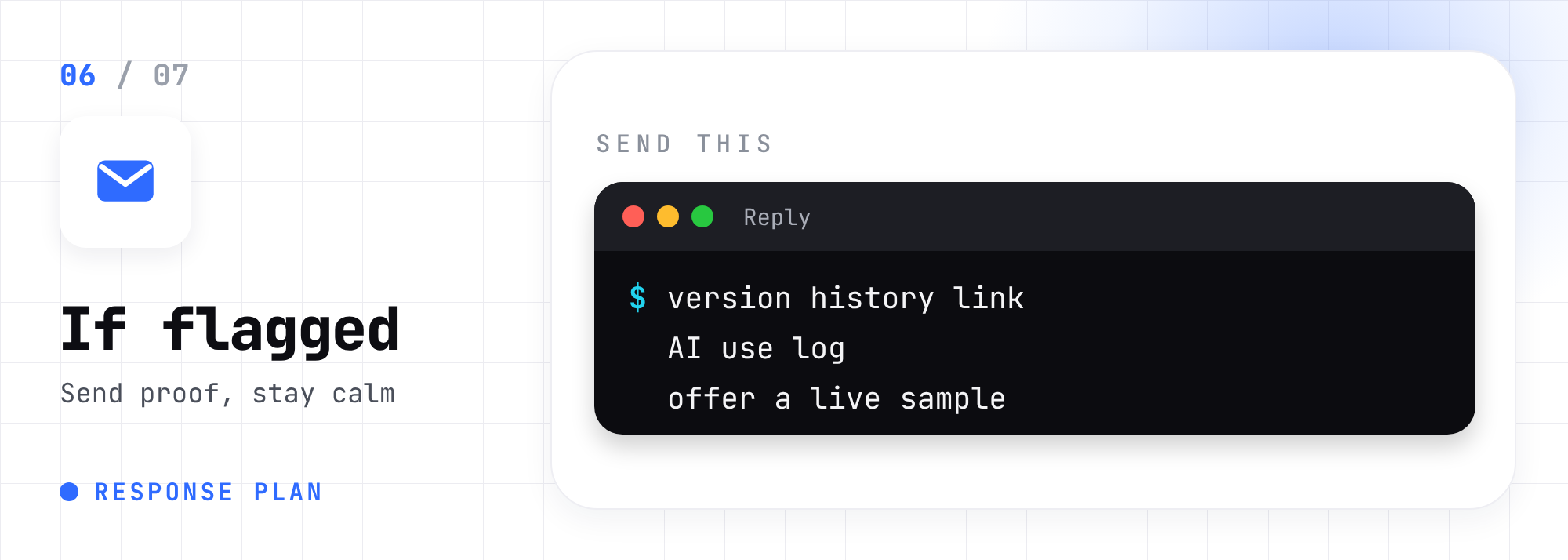
Reply calmly.
Send your version history link with view access.
Attach your AI use log.
Offer to write a short sample live on a call.
Mention once that detectors are weakest on short samples.
The Calm Reply prompt in the paid kit writes this email for you.
Step 7: Humanize the Right Way
Pangram claims it catches 98.8% of text run through 13 humanizer tools.
When I tested this in September, two Claude skills alone left my draft at 71% AI.
Getting it to 100% human took a 4-step chunking loop.
To prove the writing is yours, the words need to come from you.
Write the first draft yourself.
Use AI after that, only to edit or check facts.
Rewrite any AI-drafted section from scratch in your own words.
Add what only you know: a real example, a number, a mistake, an opinion.
Read it out loud and change anything you wouldn’t say.
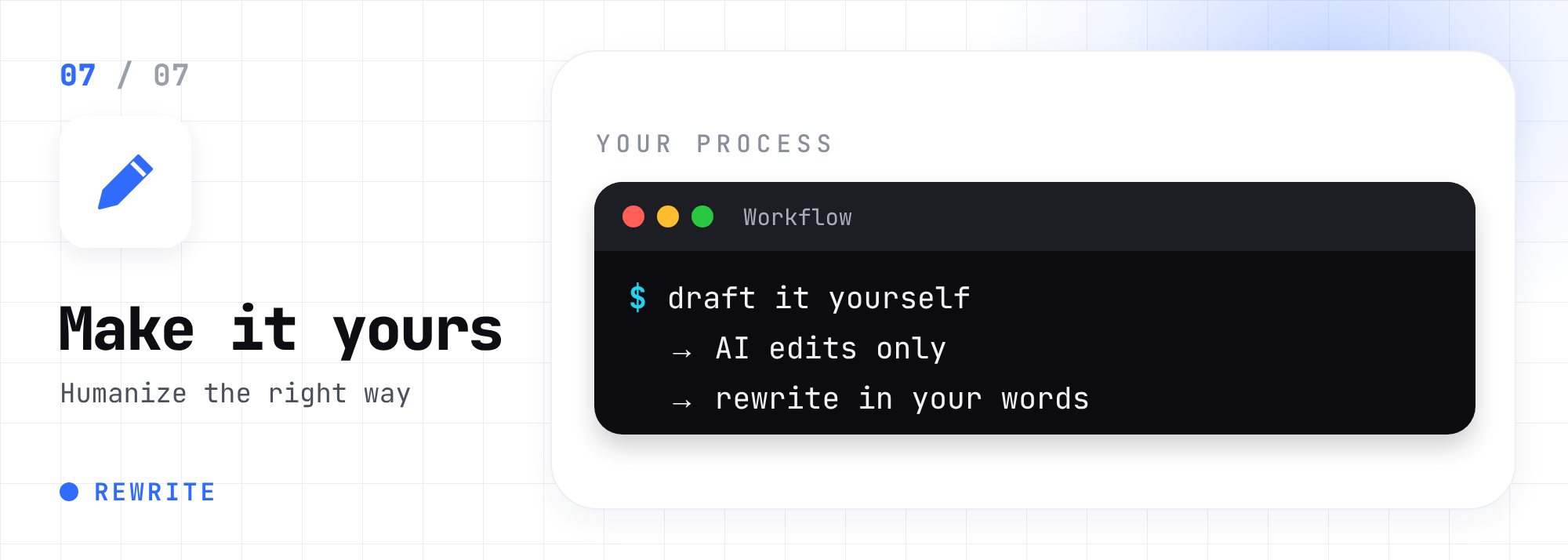
The Make It Mine prompt in the paid kit walks you through the rewrite.
Want the full experiment? Here’s the issue where I took that draft from 94% AI to 0% AI on Pangram:
Best Use Cases for This System
Freelance writers and ghostwriters: Send version history with every writing sample before anyone asks.
Students: Write every assignment in Google Docs from the first word. Your history is your defense.
Newsletter writers: Keep your log for every post now that any reader can scan you.
Job seekers: Keep cover letters and writing tests in a tracked doc. These are short, which is where detectors misfire most.
Anyone who uses AI to edit: Your log separates “AI-assisted” from an accusation.
A freelancer, a student, or a writer just came to mind. Forward this to them now.
Mentor Moment
Slow down for a second.
The detector worries me less than what writers are doing to themselves because of it.
A writer on Substack this week changed one typo and watched their score drop several points.
Then they asked what happens when we keep a worse sentence because we’re afraid the better one will get flagged.
Don’t do that.
AI can draft sentences, but your voice comes from your experience, your opinions, and your habits on the page.
Write the best sentence you can, and keep your version history so you can show how you got there.
Recap Checklist
☐ I understand a detector score is a prediction, not proof.
☐ I know the patterns that push a score up.
☐ I know short samples are where false flags happen most.
☐ I write important pieces in Google Docs or Word with version history on.
☐ I name versions at outline, first draft, and final edit.
☐ I keep an AI use log for every piece I publish or get paid for.
☐ I saved my voice fingerprint from pre-2022 writing.
☐ I rewrite any AI-drafted section in my own words and log it.
☐ I have a calm reply ready if anyone flags my work.
You have the system. Paid members get the prompts, skills, and replies to run it today.
Paid Member Gift: The Proof of Authorship Kit
Thanks for backing this work. Here’s everything I promised at the top.
→ 6 copy-paste prompts: Audit your draft, build your voice fingerprint, edit without losing your sentences, and rewrite AI-assisted sections in your own words.
→ 2 Claude skills: The two skills I tested on Pangram. Run them as a first pass, then rewrite with the Make It Mine prompt.
→ The proof toolkit: The paper trail setup, the AI use log template, and ready-to-send replies for a client, teacher, or editor.