

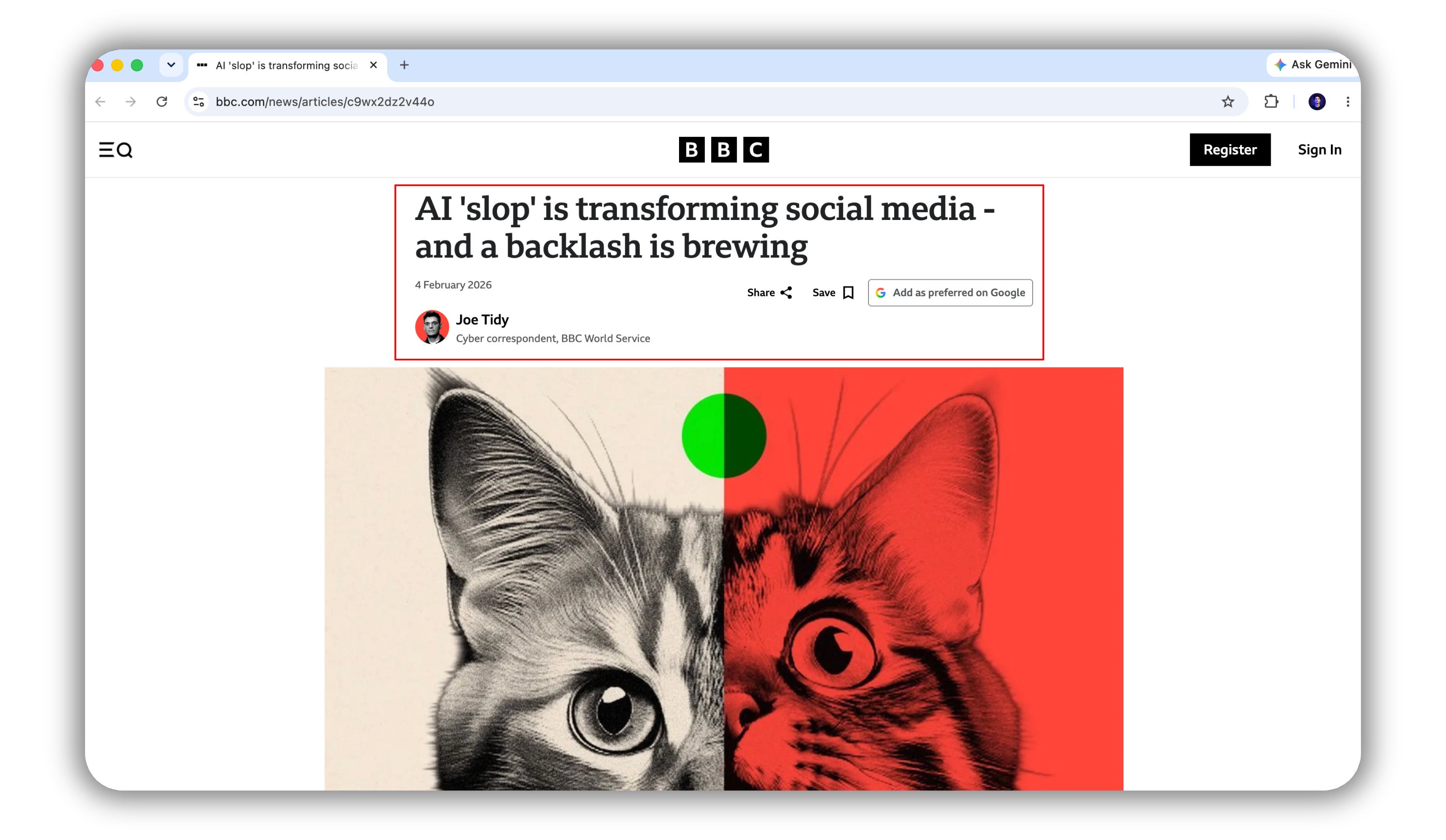
Platforms are punishing AI text and burying it.
It’s happening everywhere.
And rightfully so.
Imagine being able to prompt a chatbot and get an 800-word article about the future of productivity in nine seconds.
Also, I made a cheatsheet below: (Must Save and Share)
No research done, no opinion given, no story told.
And anyone else can do the same, which means a lot of recycled and repetitive articles with the same structure and information.
It’s no wonder readers are fed up with this and why platforms are making efforts to bury this type of content.
Two weeks ago, I wrote a 3,000-word newsletter. Before sending, I checked it on Pangram and got a result of 94% AI.
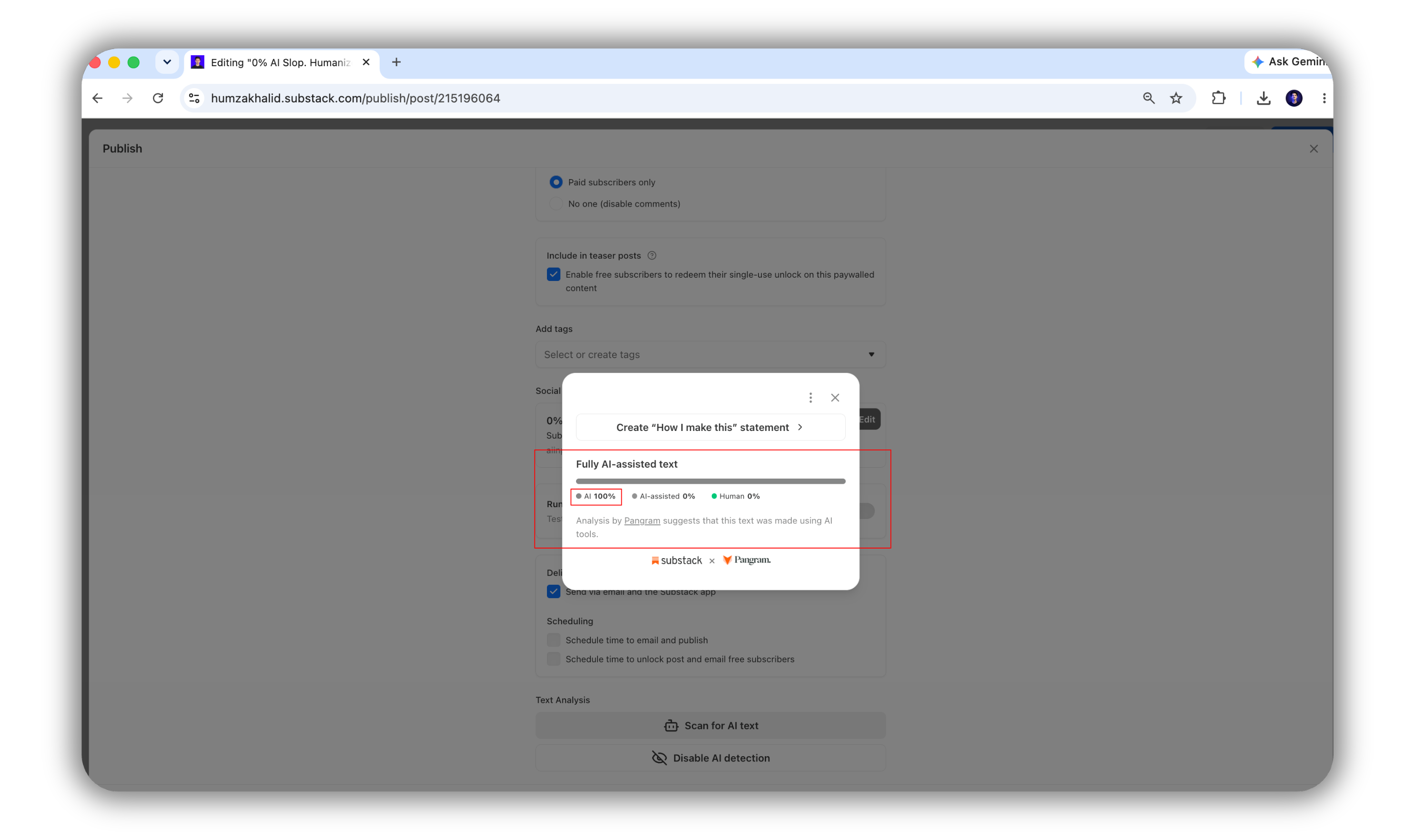
Then I started a week of testing and failing and testing and finally creating a process that has taken my content past the finish line (100% human) time and time again.
Don’t believe me?
Run SubStack’s AI scan on this issue. It’s 100% human.
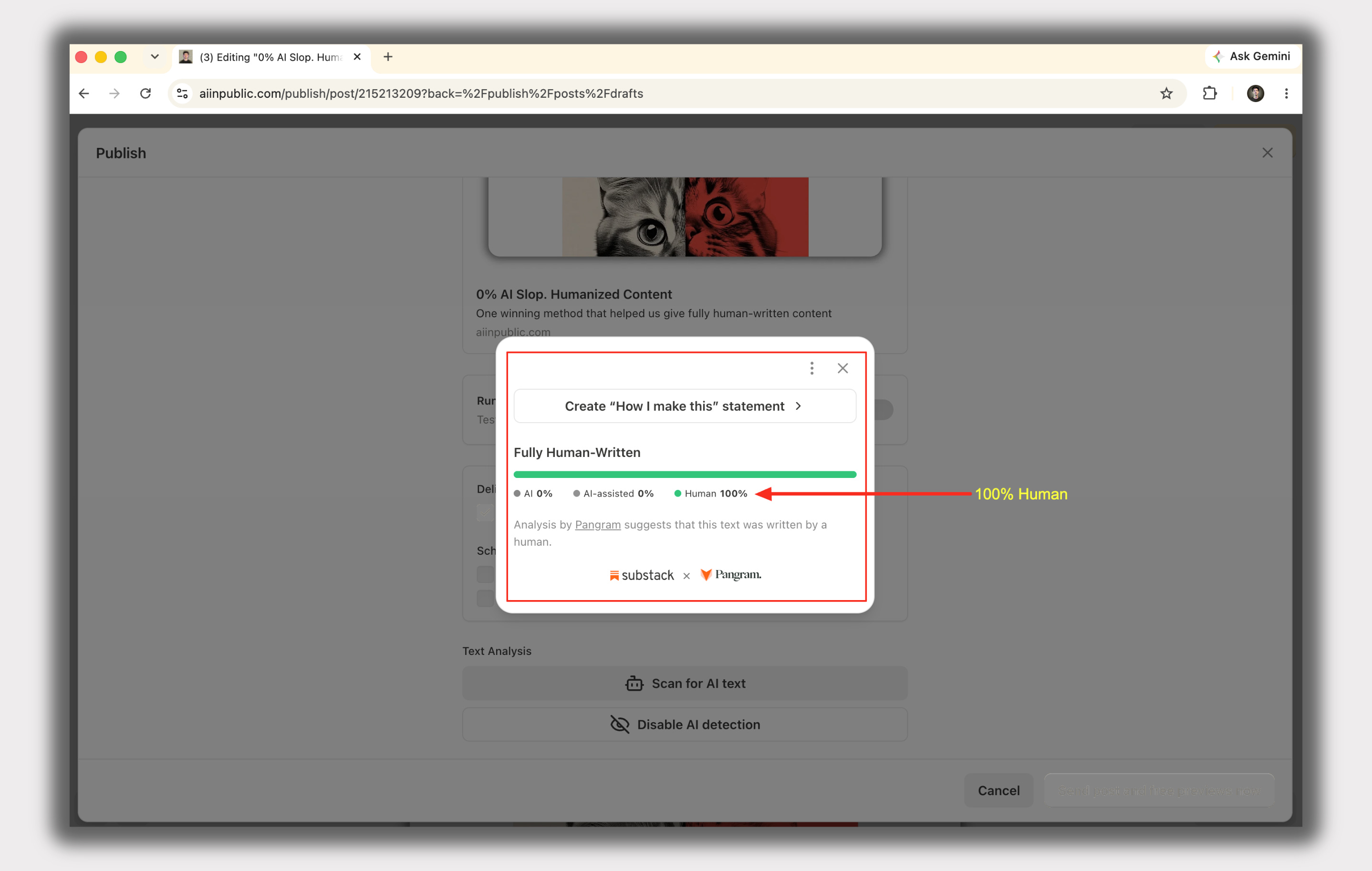
The strategy we are going to expose in this issue has already worked for us and will also work for you as well if you read the full issue and follow each step carefully.
If you get stuck anywhere, then DM me.
Here’s how I did it:
This guide takes about 12 minutes to read. You will be able to make 100% humanized content.
GIFT FOR READERS
Readers will get two bonuses from my experiments:
A Notion doc with all the words/phrases/sentence structures Pangram flagged.
The 2 Claude skills I created and used during the experiment, which you can install into Claude.
Note that tools like Pangram are extremely difficult to pass. There’s a reason why. If you’re serious about creating content on the internet and want to get around Pangram, buckle in.

Quick AI Slop-related PSA for writers and creators.
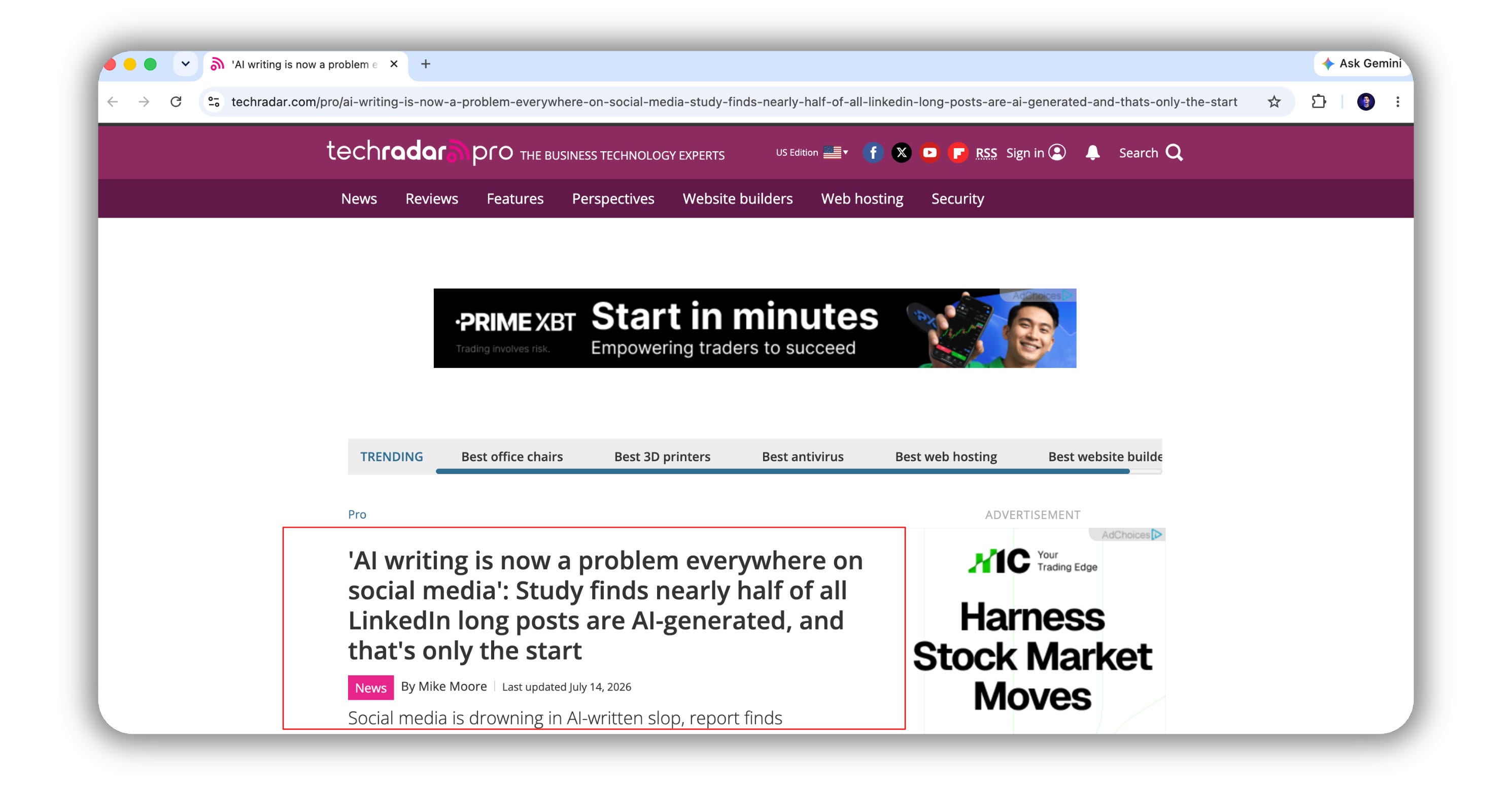
“A Pangram study of over a million posts found more than 41% of long-form LinkedIn content is fully AI-generated.
LinkedIn alone accounted for 62% of all the AI-written content found across every platform studied.
In May 2026, LinkedIn’s own editorial team announced they’d start reducing reach for posts that read as generic AI slop with no original point of view.”
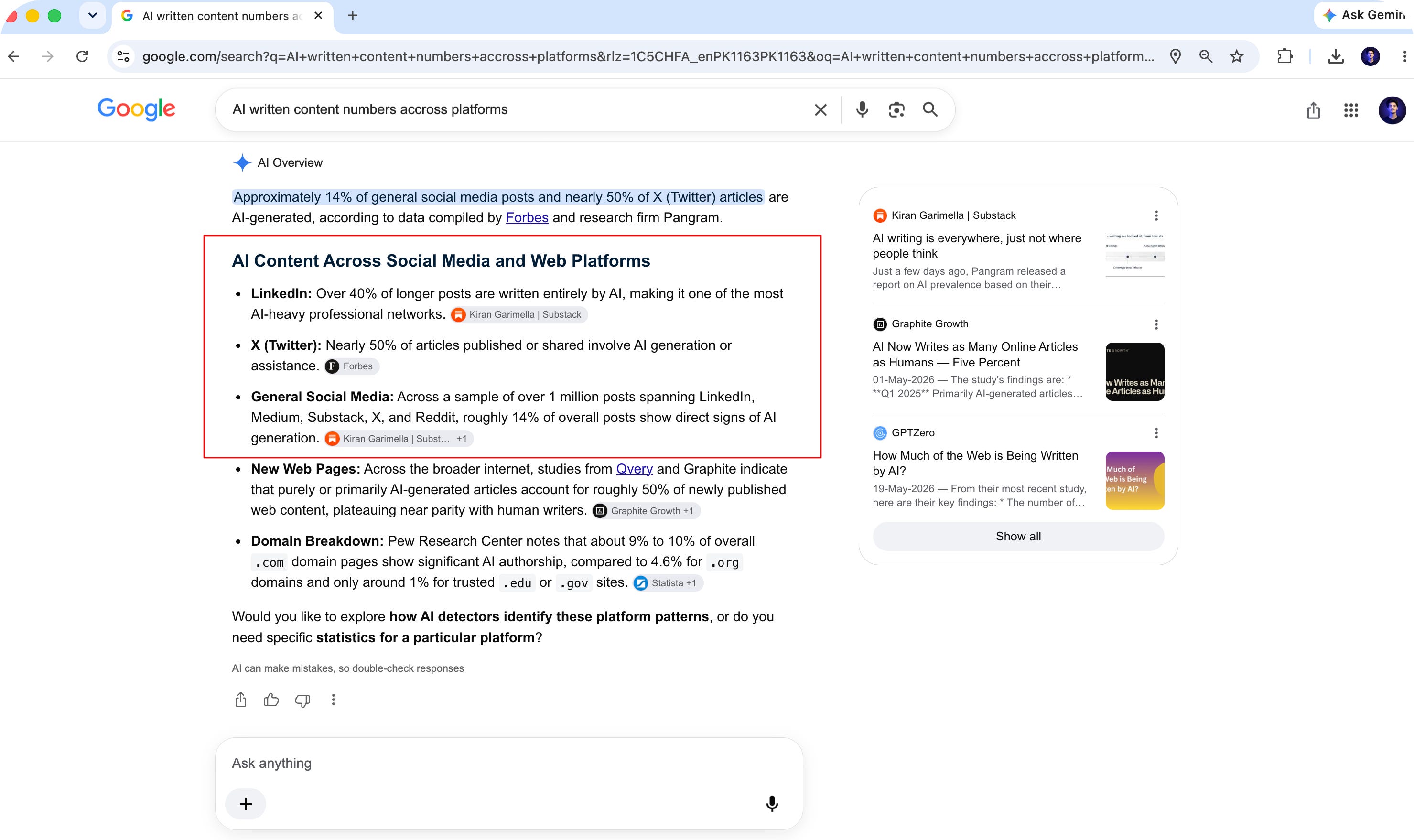
Impact:
Accounts that leaned entirely on AI-written content saw shrinking audiences, weaker brand voices, and reduced sponsor confidence.
Multiple platforms, such as LinkedIn and Substack, are actively limiting the reach of posts that appear to be AI-written.
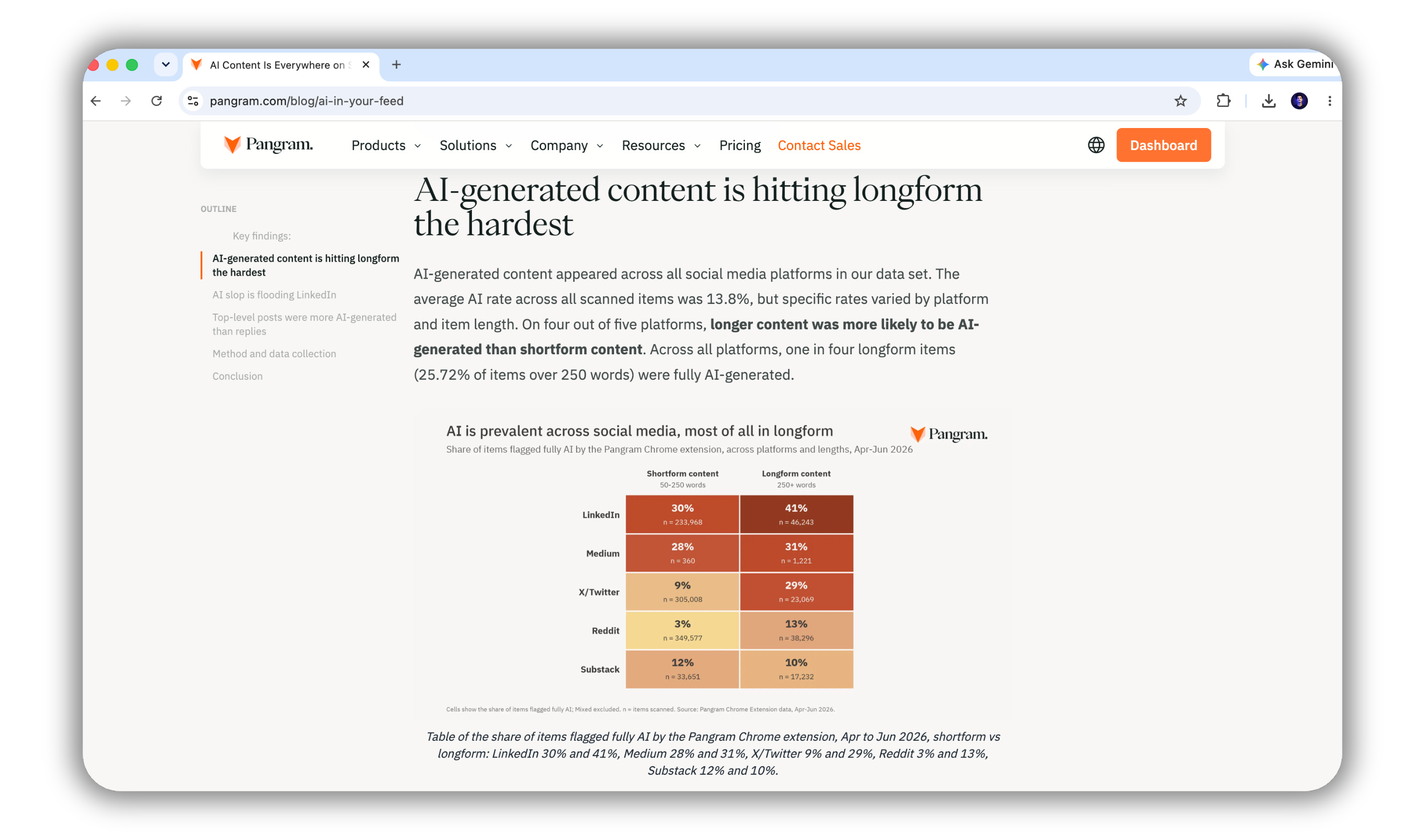
Accounts that were growing fast began stalling once their writing started sounding like everyone else’s.
What you will get inside
How a paragraph written by me was detected as AI
Why two different Claude skills both got detected as 71% AI
A 4-step system that passes AI detectors
Paid members also get a Notion document of all the words and sentence structures that get flagged by Pangram.
AI Slop Content
Then I ran some of my own tests with my own writing and shared my observations with a friend.
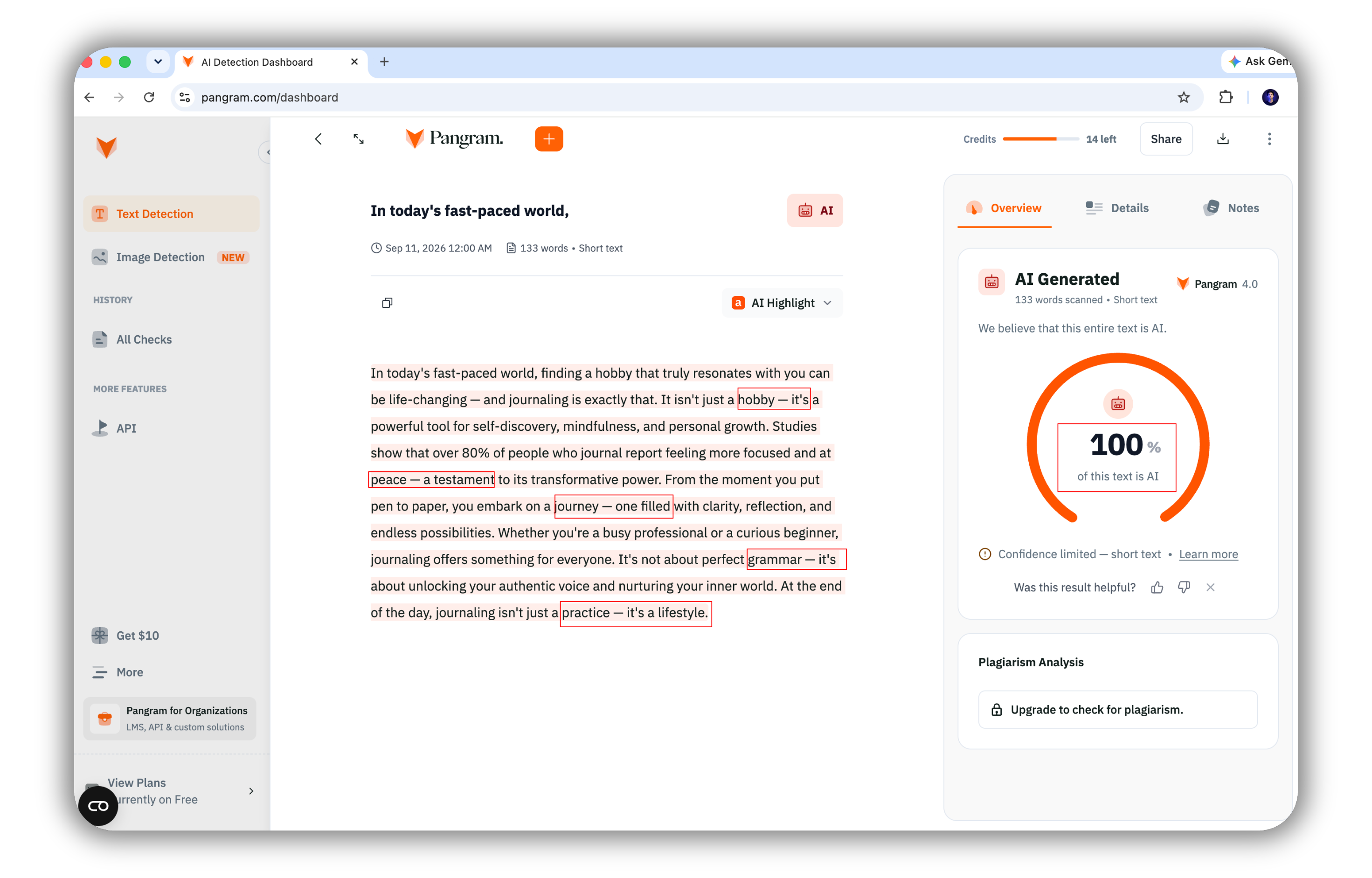
They were curious to see what happens when they run a paragraph of original writing, written straight from memory, no AI assistance, through a detector.
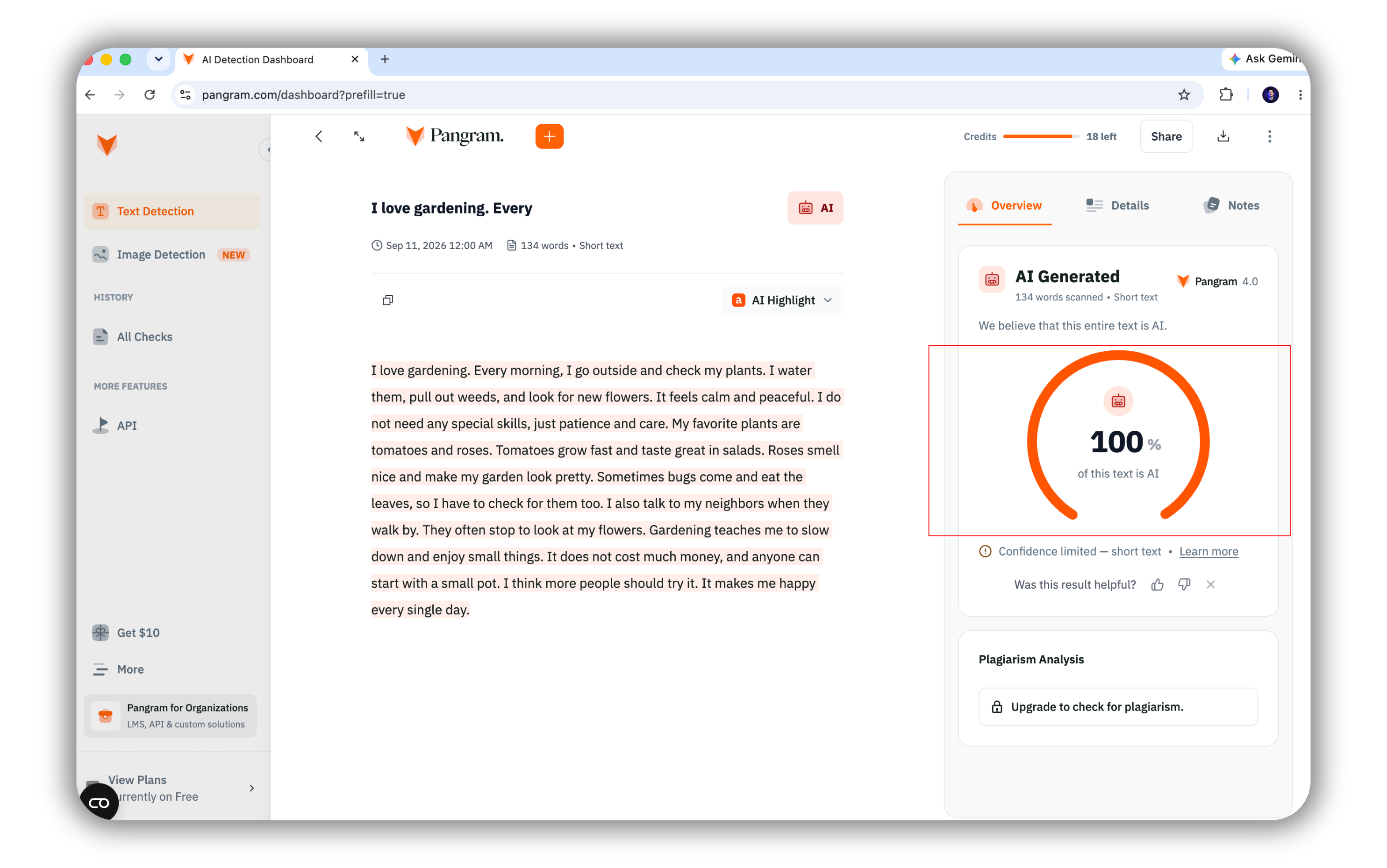
And lo and behold, it was flagged as ‐AI‐.
Turns out even your own writing will get you flagged. So will using common clichés that are feed in the eyes of detector are not good to use.
But how do these Tools check your content that even human written content somehow gets flagged?
AI Detector workflow
So what’s up with that?
Turns out I wasn’t worrying for nothing: It’s possible for AI detection programs to determine whether an entire text is AI-generated.
But it’s also possible to trip them up with something as seemingly inconsequential as an improperly placed em dash.
This is because many of today’s AI detectors don’t detect texts based on “AI vibes”.
Instead, they analyze the patterns of texts on a sentence-by-sentence basis.
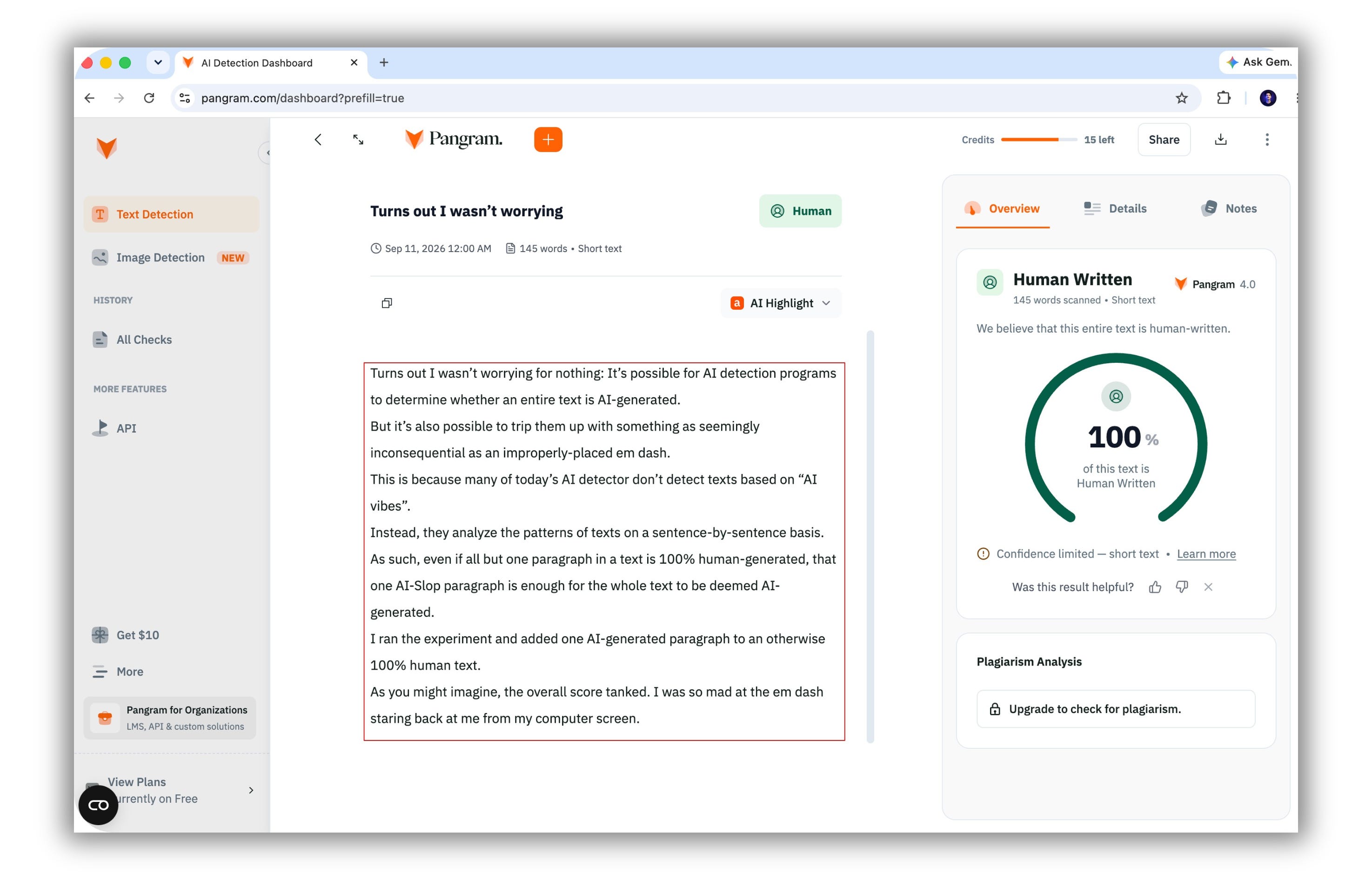
As such, even if all but one paragraph in a text is 100% human-generated, that one AI-Slop paragraph is enough for the whole text to be deemed AI-generated.
I ran the experiment and added one AI-generated paragraph to an otherwise 100% human text.
It’s not easy; it's challenging
I was going to test AI detectors
It took me a few minutes to go through the piece, remove filler words, and get a passing grade from the detector.
But this piece was only about ten or fifteen lines, maybe 150 words. Getting a long article to pass was a little trickier.
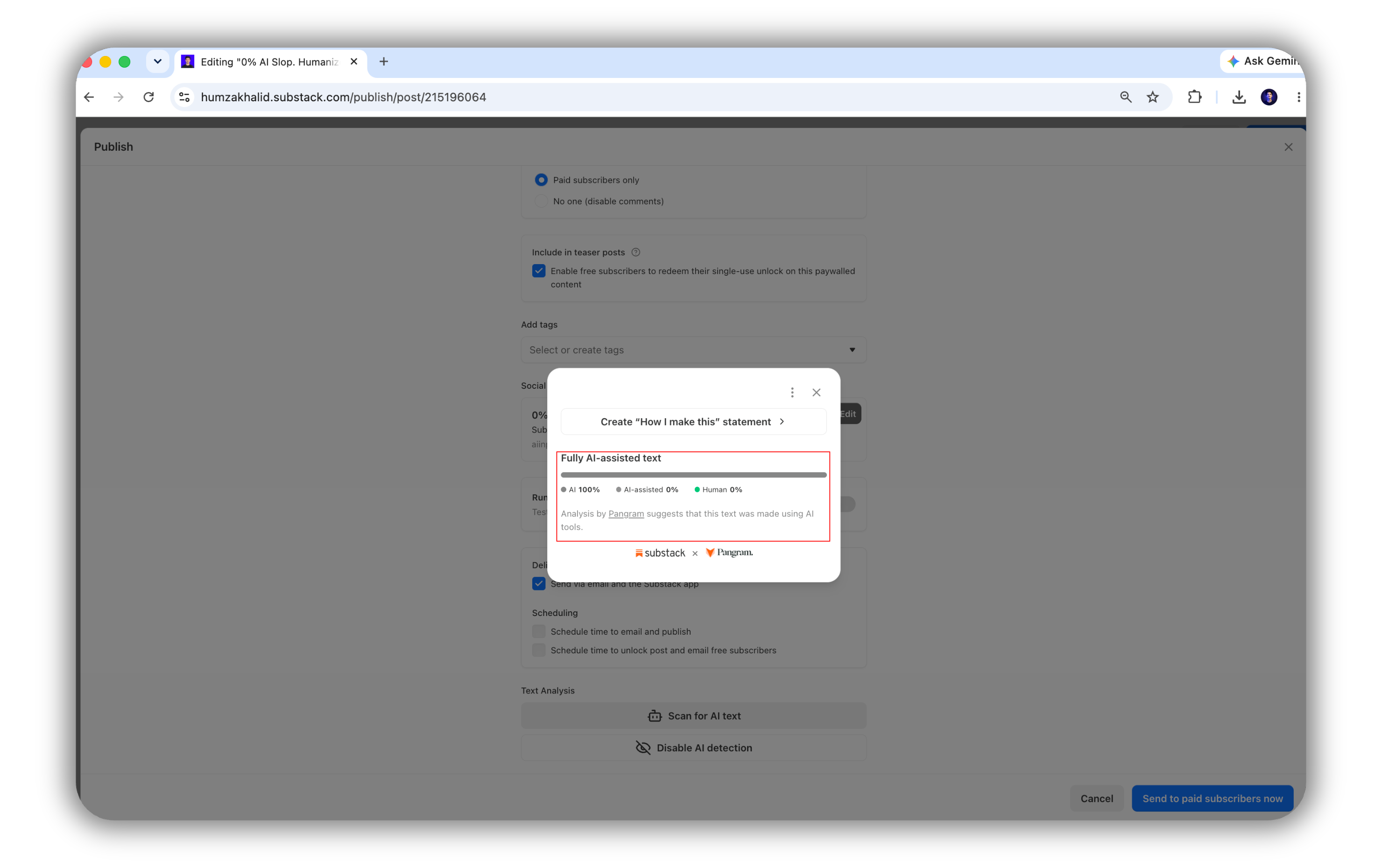
So I removed any em dashes, which detectors seem to pick up on, removed filler words and AI-esque sentences, and sent a full, 3,000-word article through Pangram, Substack’s AI detection partner.
But still managed to get this:
I’ll warn you now: scoring close to 100% human, which is what I managed to do, might be the most challenging AI-related thing I’ve done this year.
And by challenging, I mean I’m a little obsessed with finding out how to do it.
Why am I so fixated?
For full-time newsletter creators, AI detection can make or break their businesses. Especially high-volume creators who publish multiple times a day or write on behalf of brands and businesses.
They rely on AI to save time.
So, yes, AI detection resistance is important.
But not in terms of tips and tricks. In terms of process. Full stop.
That’s why I’m sharing everything I’ve learned here, and will continue to test AI detectors regularly.
If this has helped you, I’d be grateful if you’d pass it on to others who are getting ready to publish a long text.
Claude Humanizer method
To illustrate, I’ve made a skill that humanizes AI-sounding text.
When I applied the skill to one paragraph went from 90% AI-generated to only 87% AI-generated.
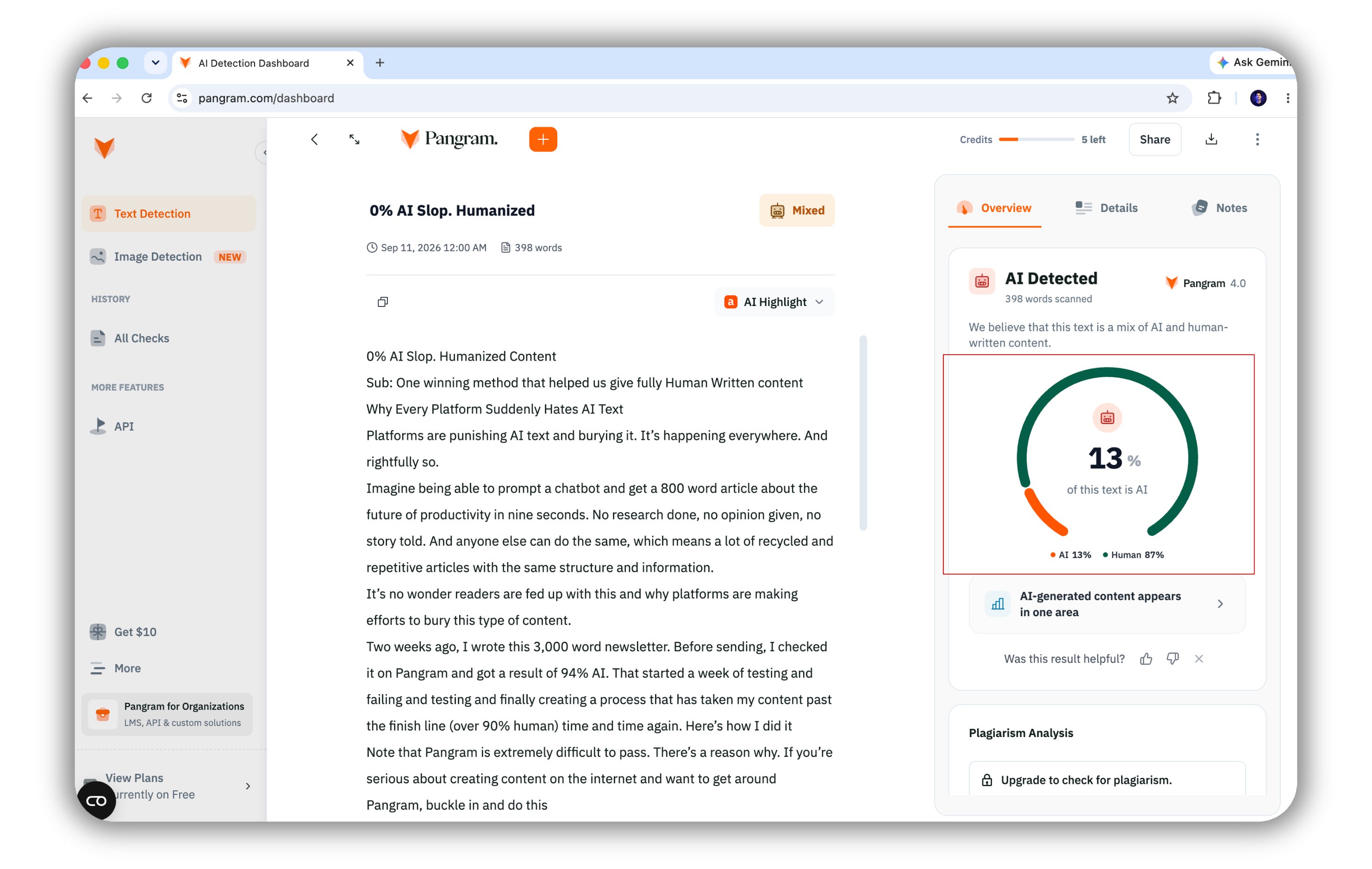
But that was just a single paragraph. The whole article is still a problem to bypass detectors.
Unfortunately, even well-engineered humanizer skills in Claude usually still fail Pangram checks for longer text.
After encountering these issues time and time again, I’ve since found a workflow that works.
AntiAI Skill method
So now I had another skill.
One that made individual sentences sound less AI-generated, or the humanizer, and one that changed the cadence of the writing to be more human (AntiAI).
I used the Anti-AI skill and checked the results.
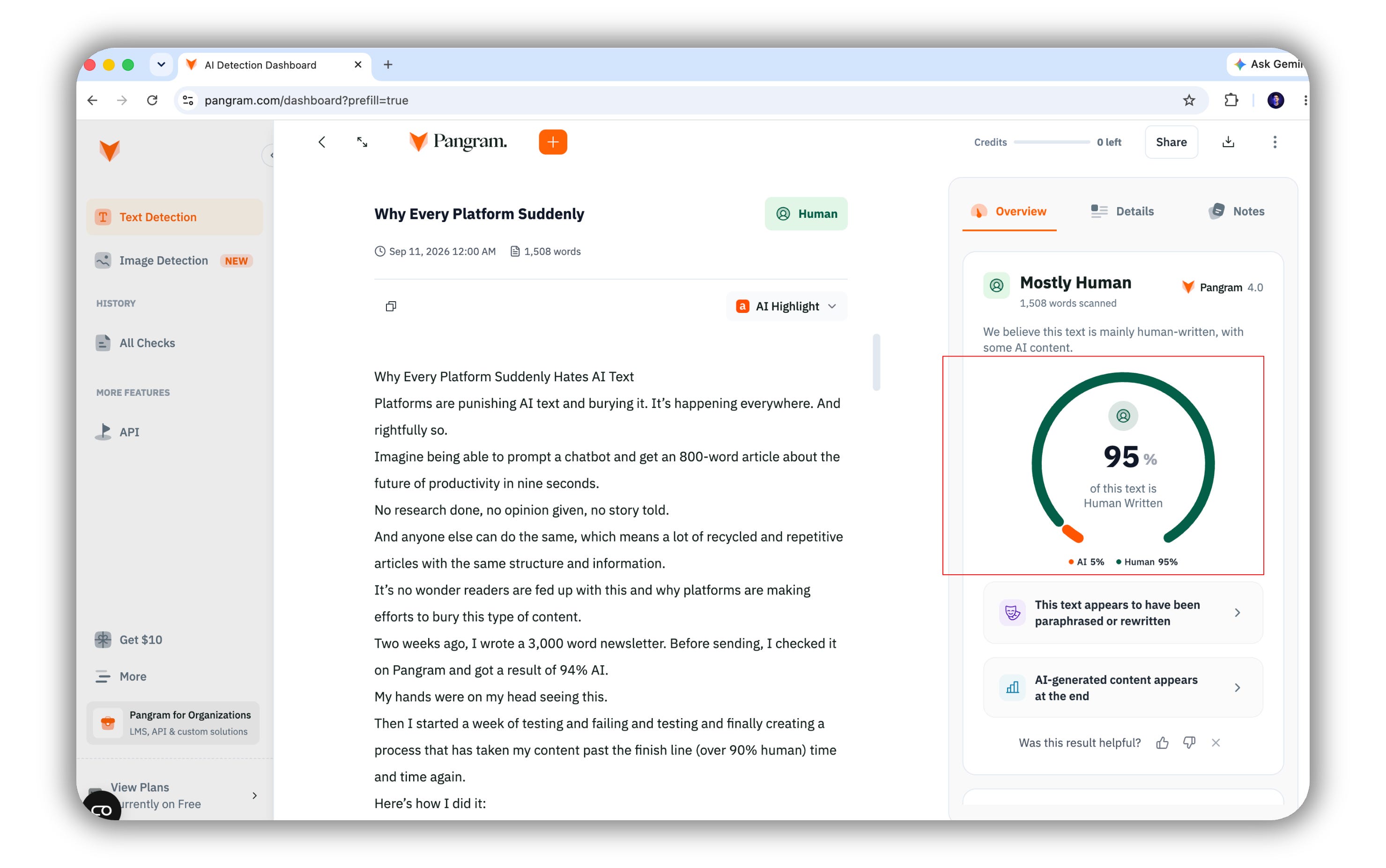
But again this test was for just 1500 words half of the article and still not 100%.
I thought I had it.
Except when I pasted in my full-length draft, it scored 71% AI.
It still didn’t work.
But I keep on trying to get that 100% human written tag on my draft.
The final and working method
So after hours of attempts and research on how to bypass this and get that I number,
I was able to score 100% Humanized.
Yes, you hear it right.
There is a way to get AI-generated writing to pass as human. And now you’re going to learn how to do that.
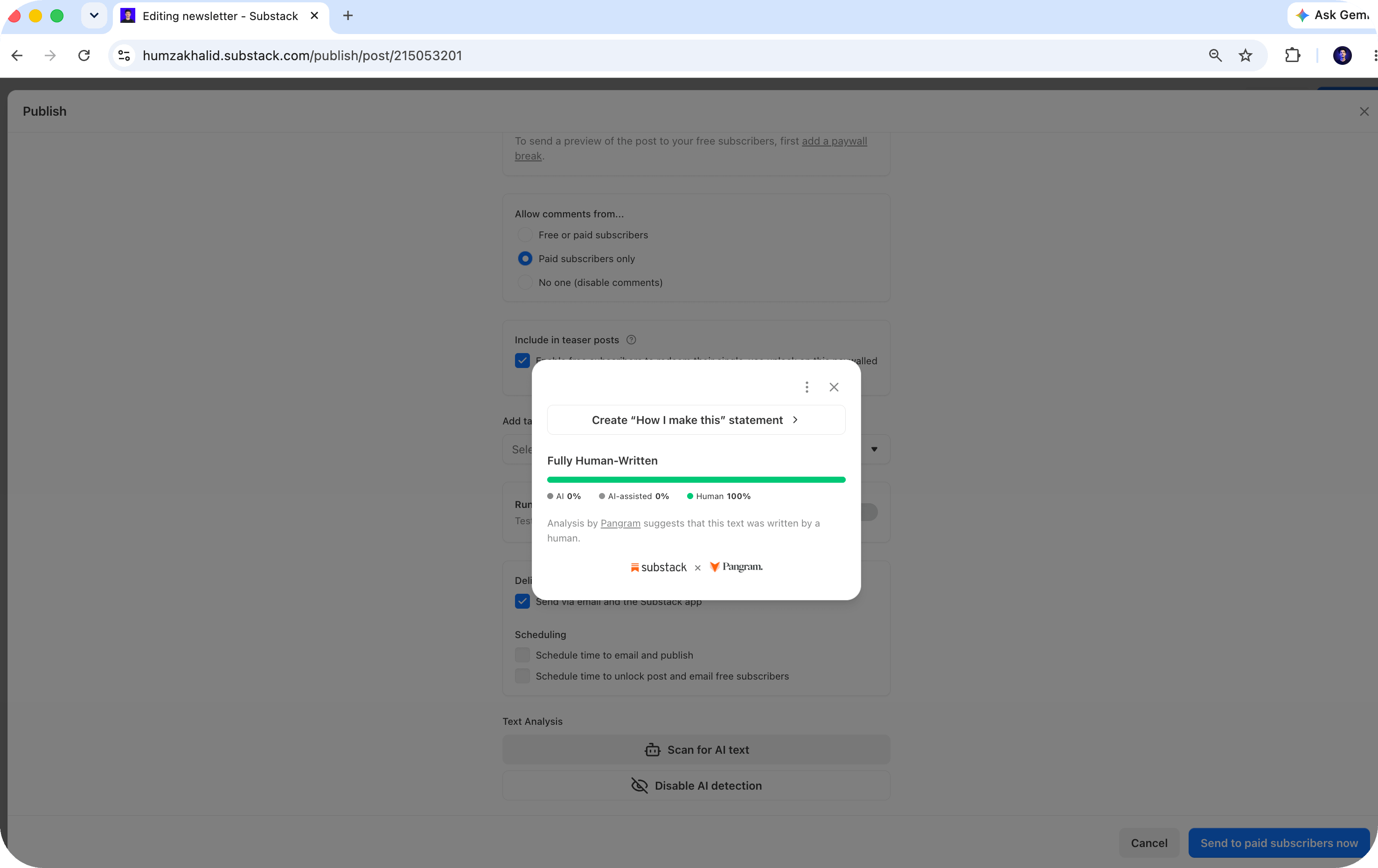
Until now, using all these Claude skills and across several iterations, they always returned with more than a 40% AI score when the full article was checked on Pangram.
But now I had cracked it.
So that is what I did. After several hours of playing, I had a winner, StealthGPT.
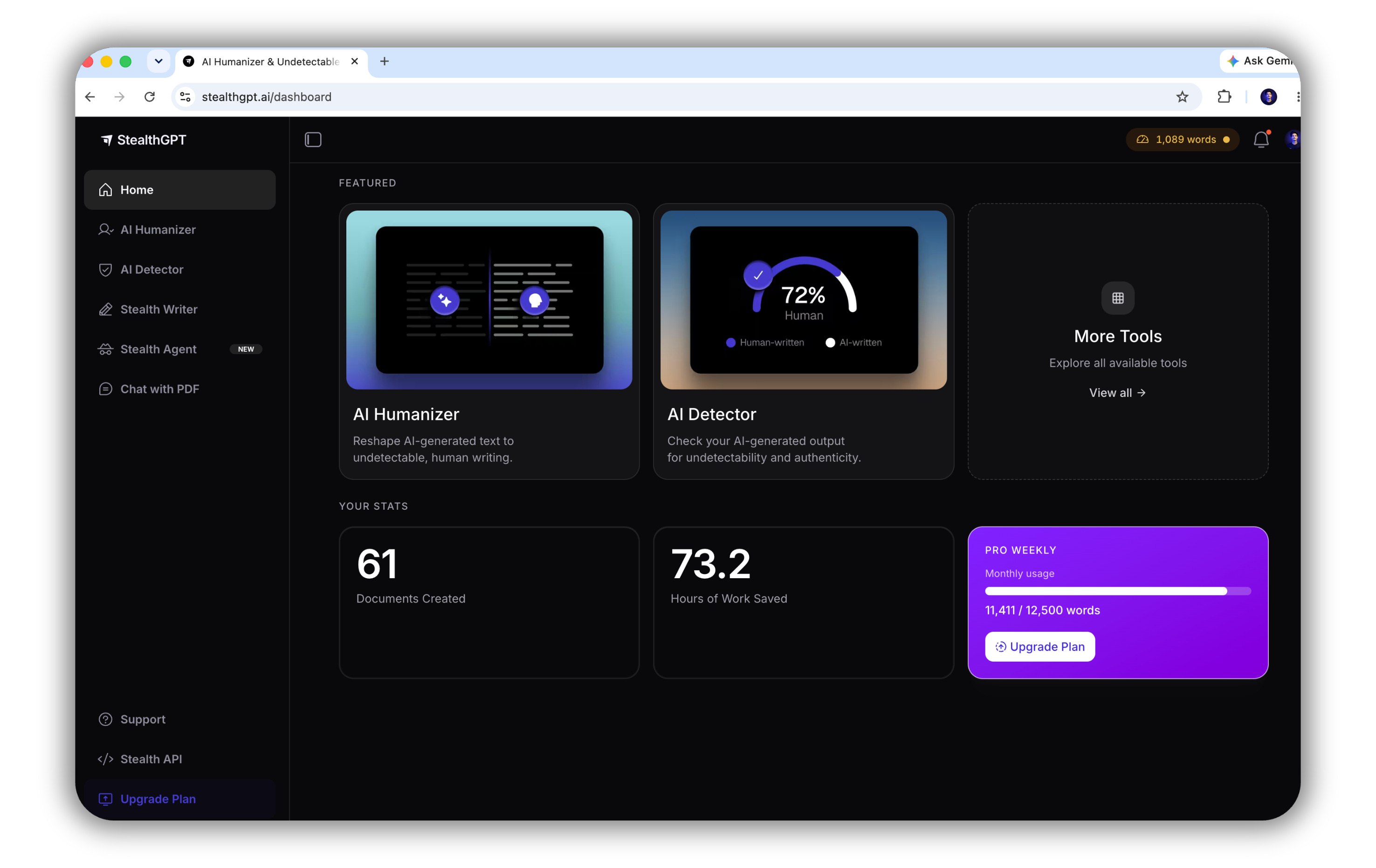
You may or may not have heard of it. It’s an app that rewrites your words to make them undetectable as AI.
It’s as simple as copy/paste your draft, choose your level of humanization, and copy/paste out the result. It passed with flying colours.
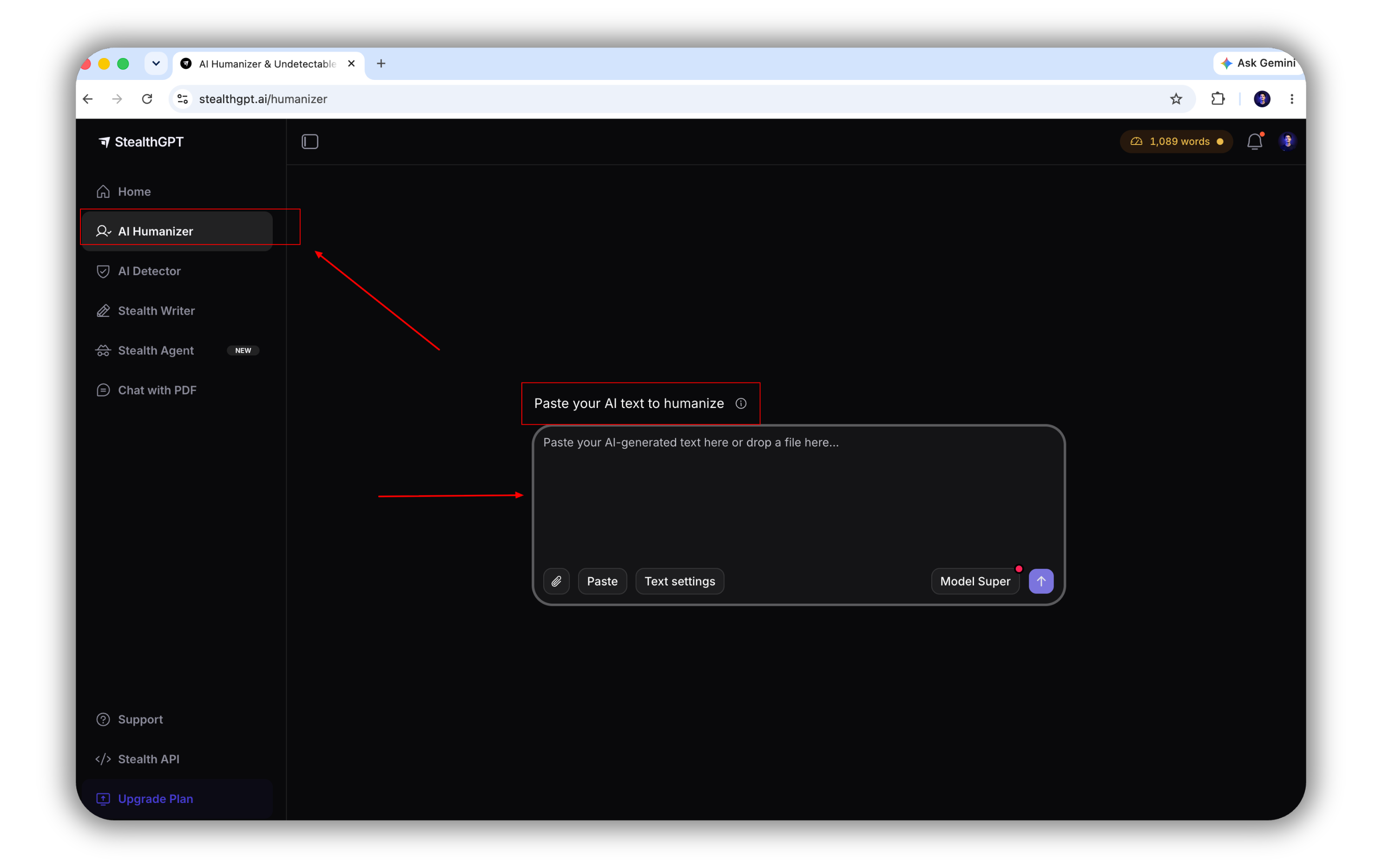
But as always in life, the moment you think you’ve cracked a nut, things get complicated, especially when you want to apply StealthWriter to whole articles.
A quick Tip
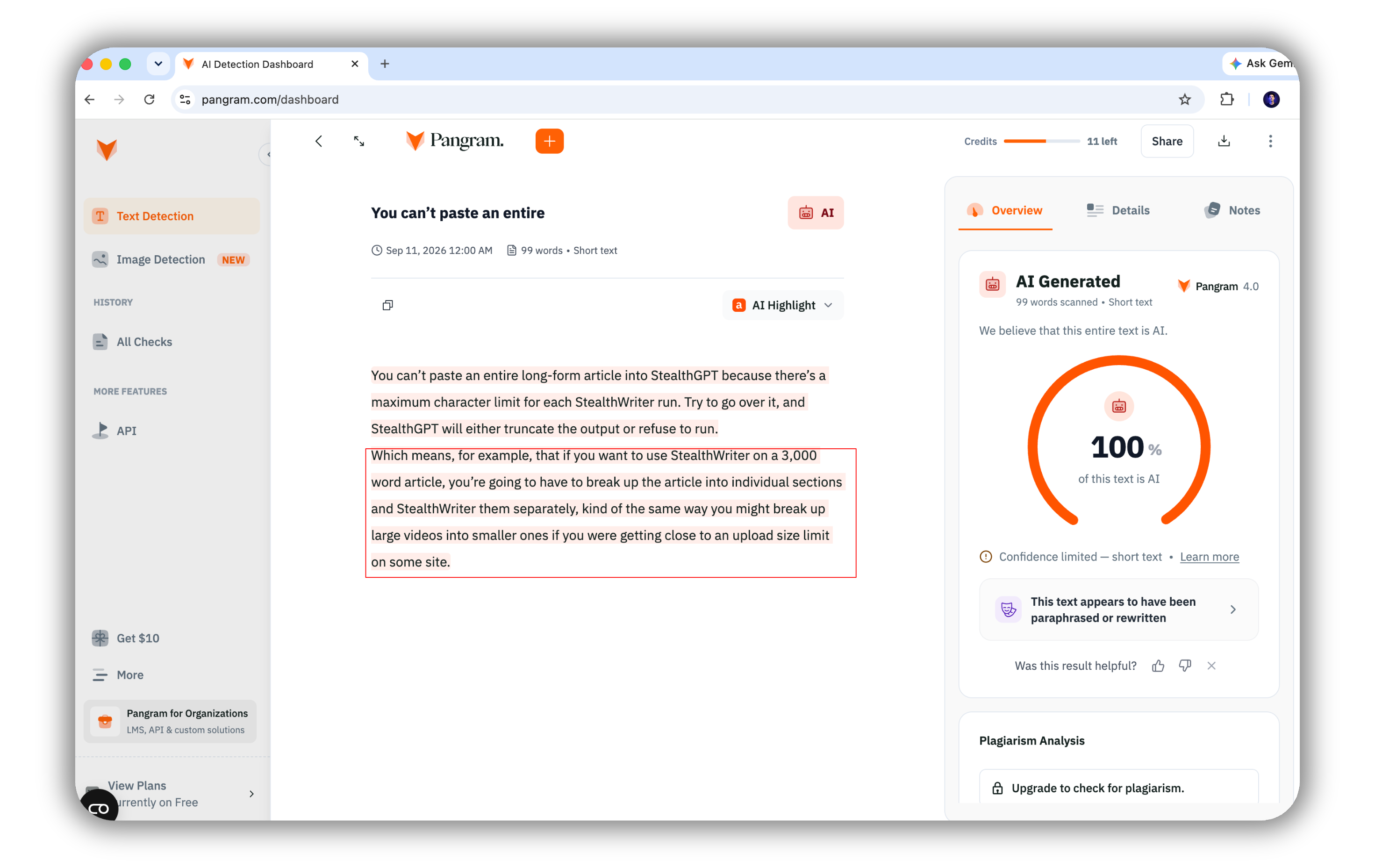
Divide your article into smaller chunks, as StealthGPT has a maximum character limit for a single command. It will not allow you to humanize the whole article in a single run.
4-step repeating method
So, what’s the process?
Basically, it’s pretty simple.
The trick is to break your article down into chunks of text.
For me, I’ll break the article up into sections that deal with one idea, which tend to be about 300-600 words.
Then, paste them into StealthGPT, one at a time.
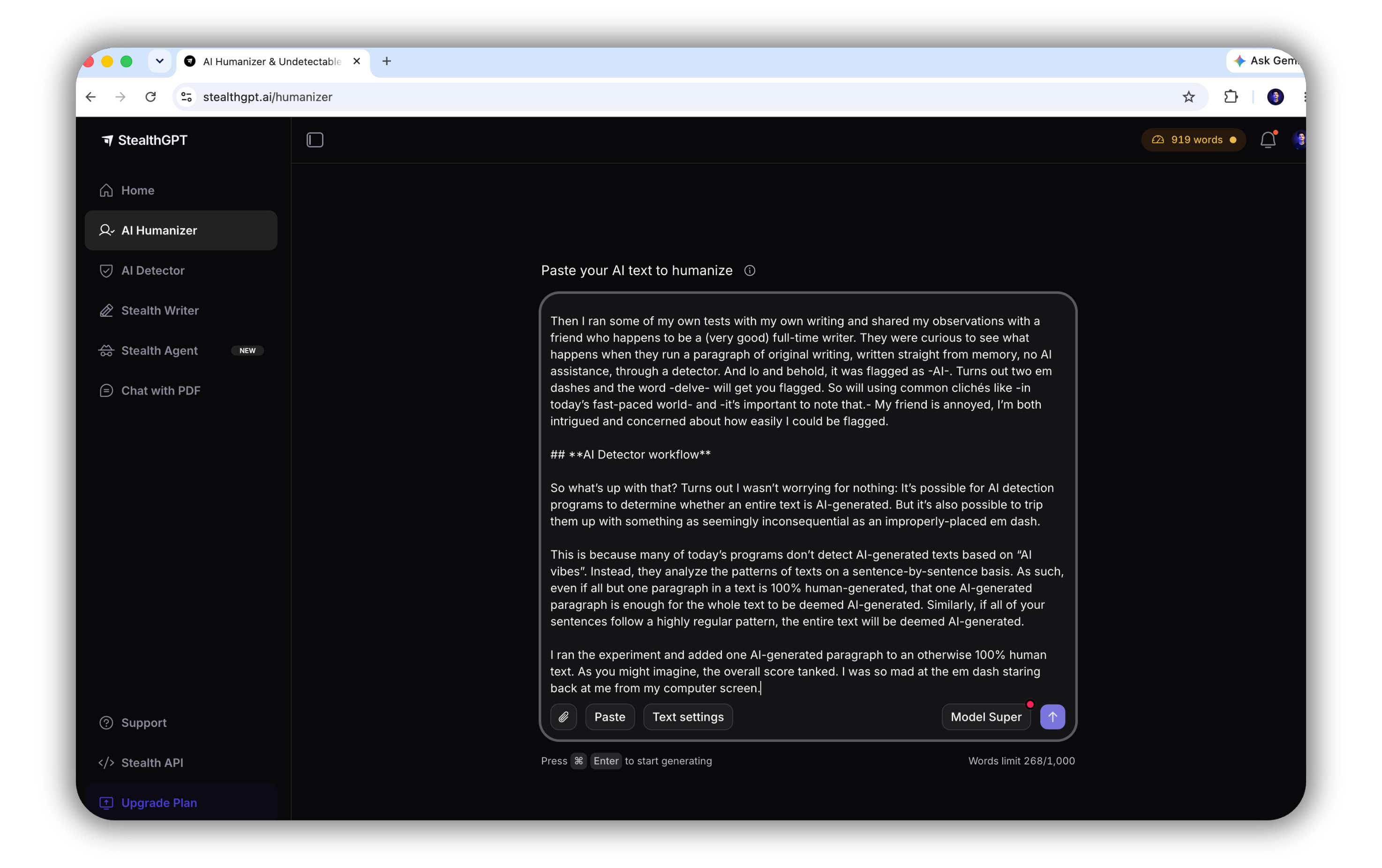
For this project, I’m using StealthGPT’s humanize option.
Now here’s the key, at least for me.
Copy and paste the resulting text into Pangram and see what score I get. If it’s sufficiently human, move on to the next chunk of text.
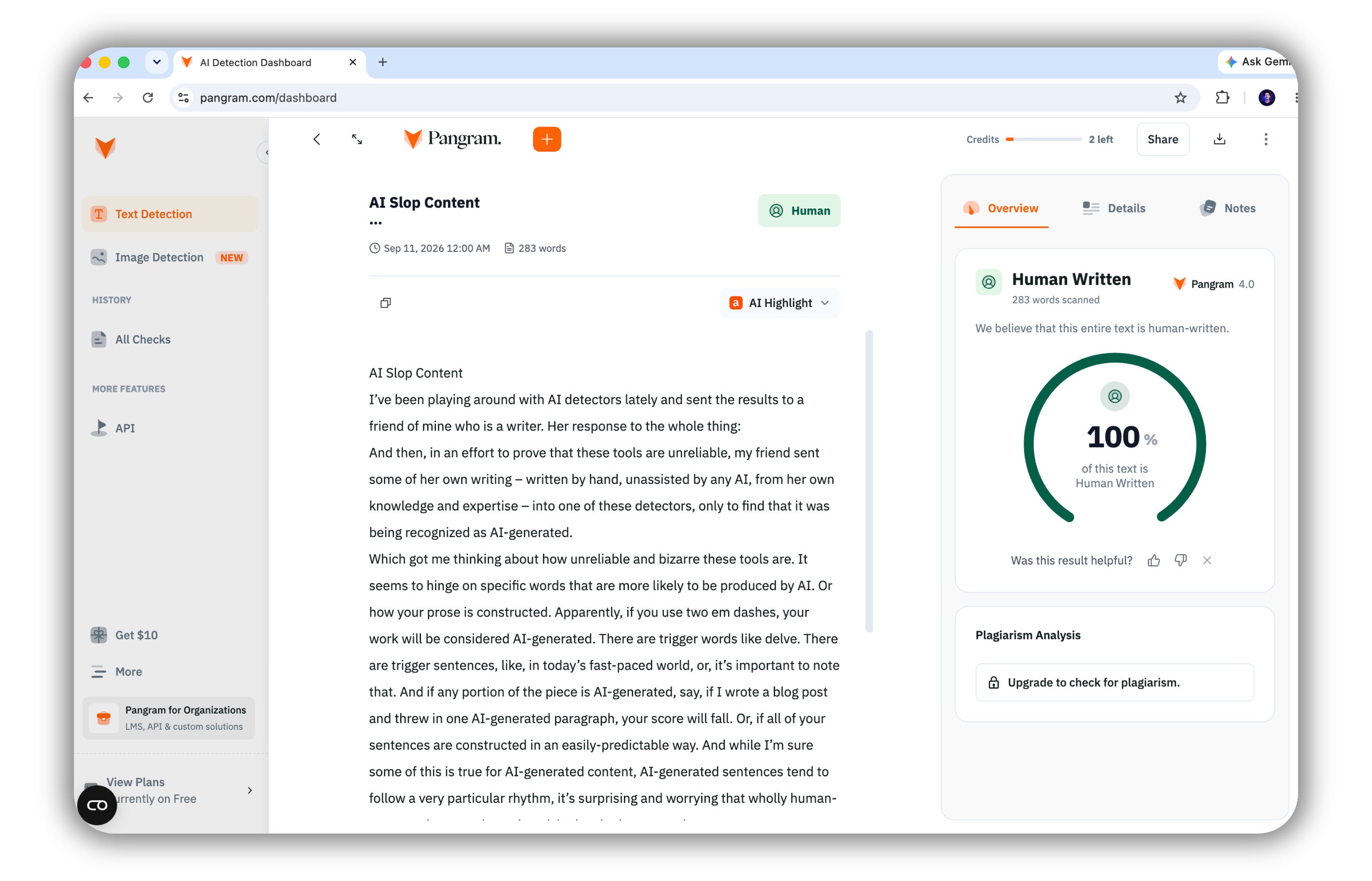
If not, send it back through StealthWriter and see what happens.
Repeat this process until Pangram is happy.
The first chunk was good to go, scoring 100% human. The second chunk wasn’t as lucky. It scored 55% AI. So I rewrote it through StealthGPT.
And this time again, give it a check on Pangram.
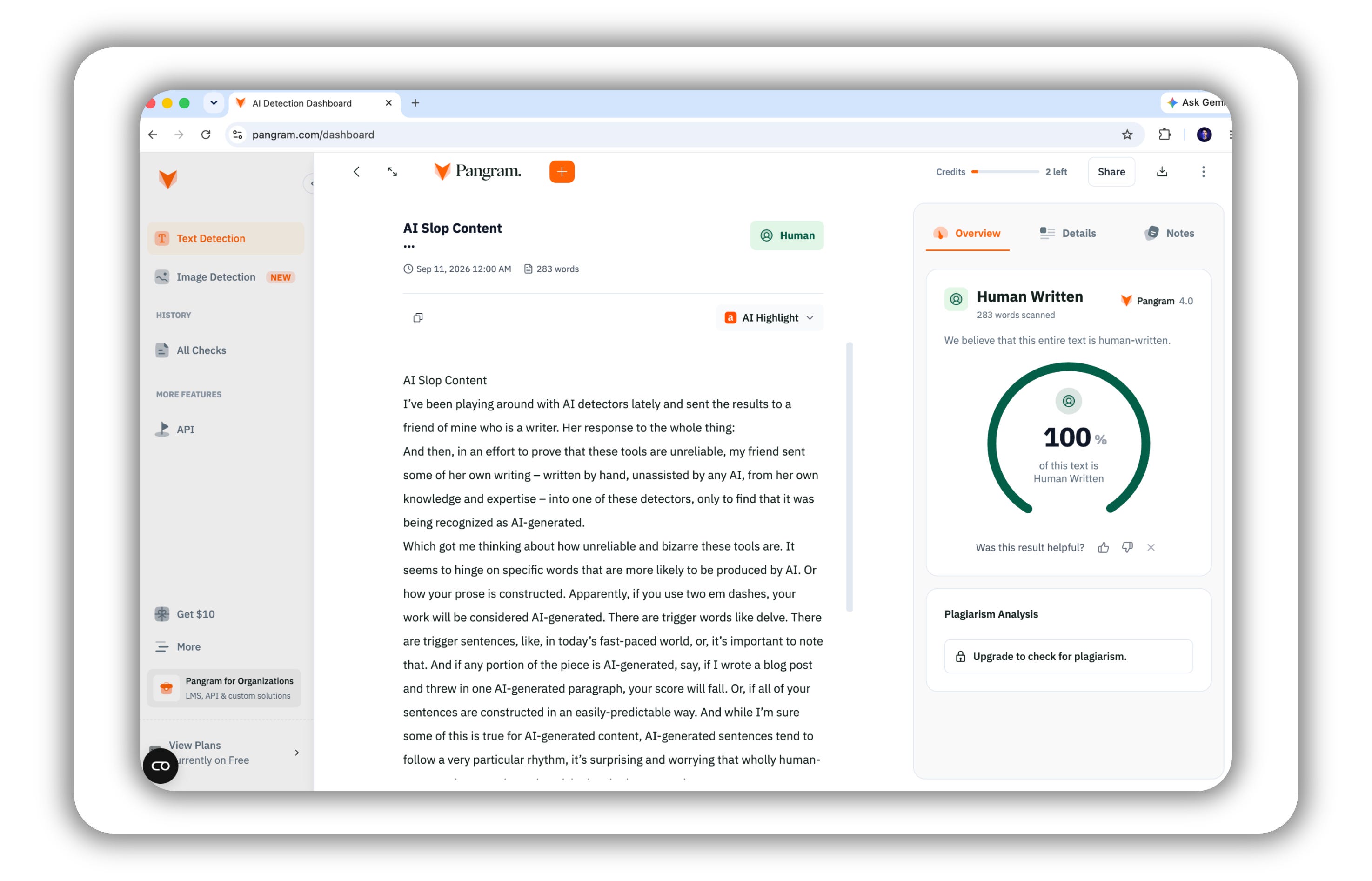
Apparently, this section of text was too meaty for StealthWriter to adequately massage into submission in one fell swoop.
So, in sum, break up your article into chunks, load them into StealthWriter or another text rewriter of your choosing, copy/paste the resulting text into Pangram or another AI detector of your choosing, and see what happens.
If it doesn’t work, rerun StealthGPT until it does, adjusting the size of the text as necessary.
It’s a simple process. It’s not complicated.
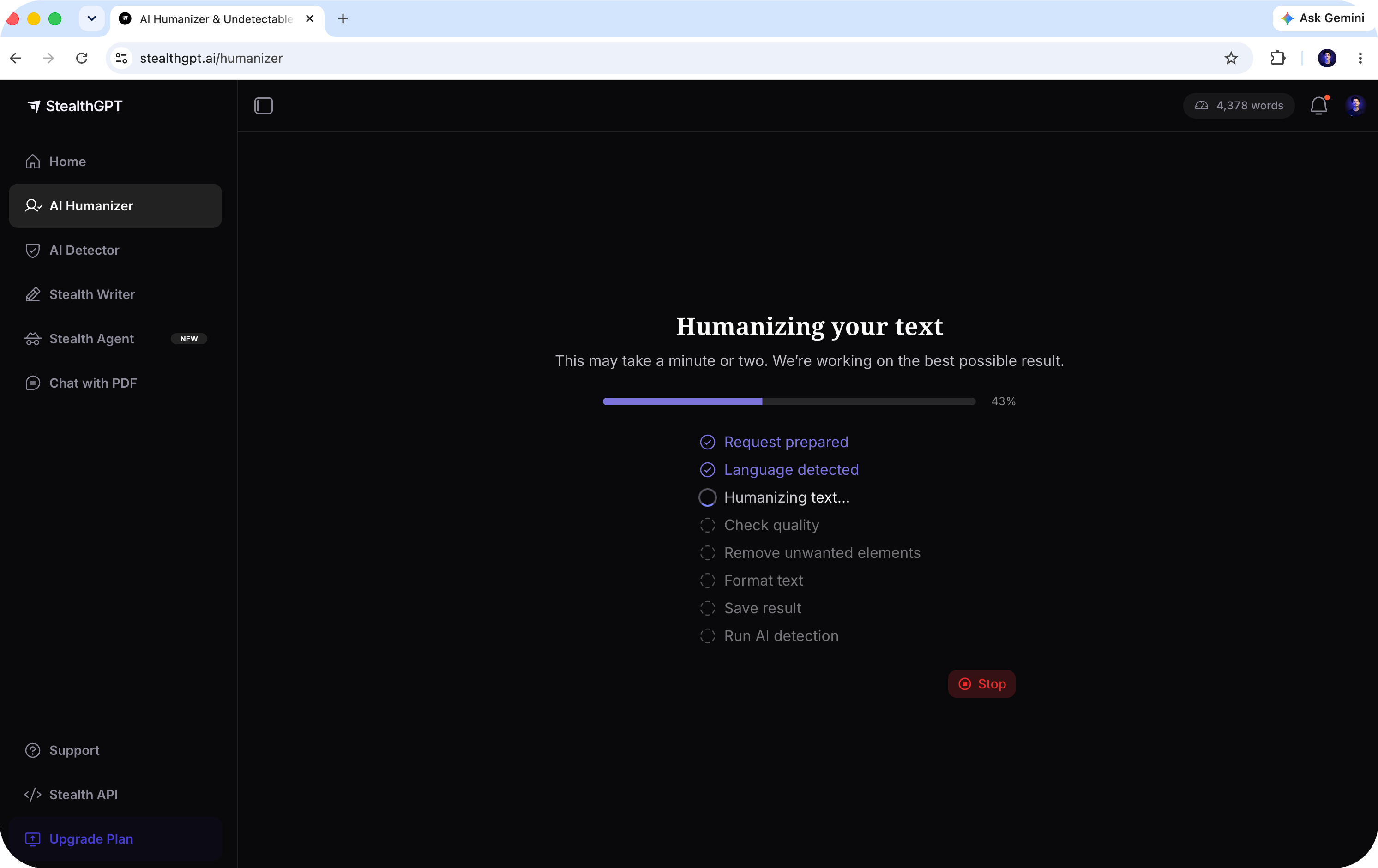
But it’s a little like working on an assembly line, one chunk of text after another, and that can be tedious at times.
Luckily, this article is relatively short. But I’ve done worse. Trust me.
And that’s pretty much it. Repeat this process for each chunk of text and presto, your article is humanized.
The Final Check
One important tip here. Just because all of your sections of an article score 100% doesn’t mean that article is going to have a 100% score.
The transitions from one section to the next can have a tone or cadence shift that flags it.
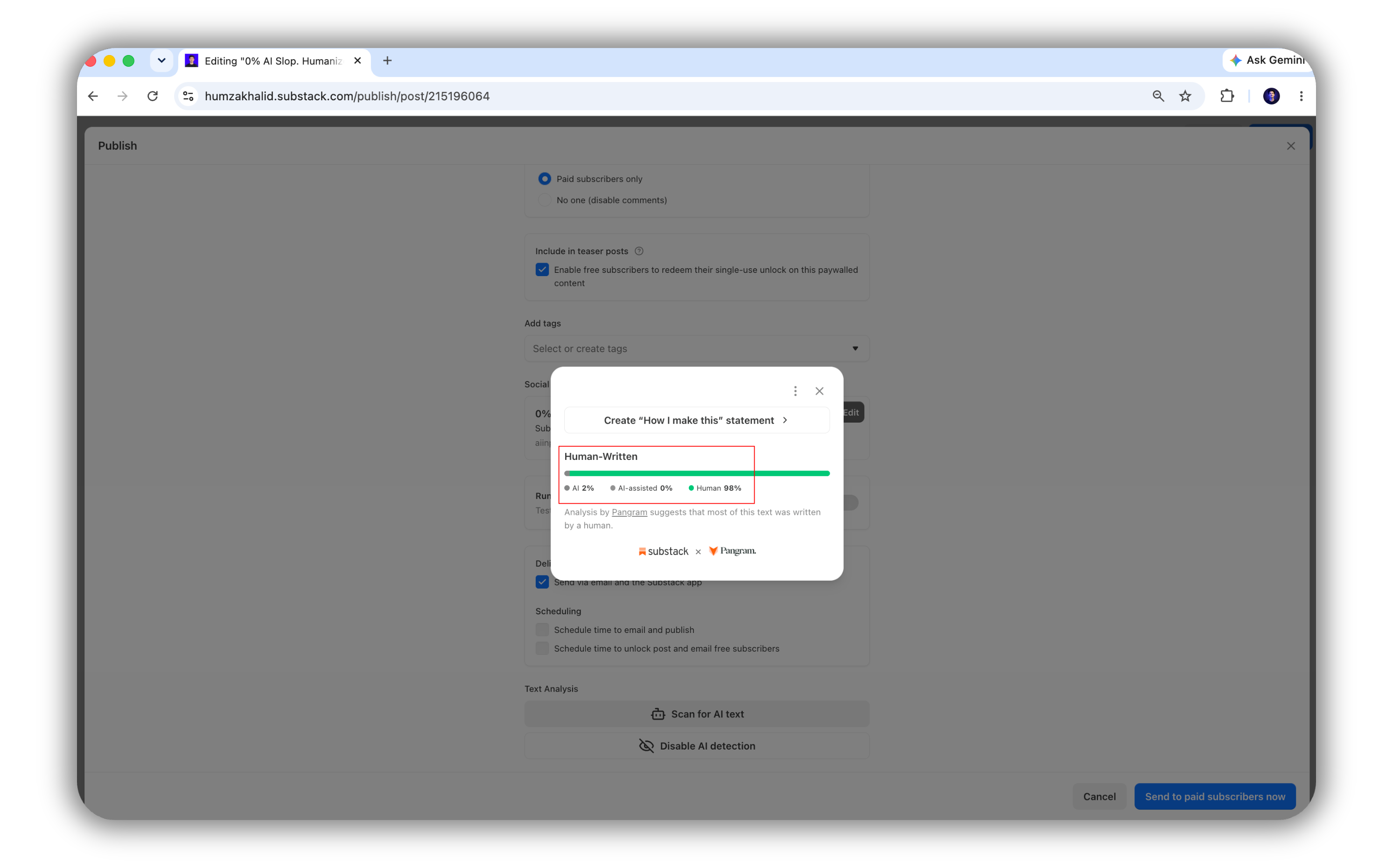
Still 98% humanized.
So once all of your sections are tuned, put them back in order and test the whole thing with Pangram.
And then, of course, if it doesn’t score well enough, fix it.
When I got a score above 100% for the entire article, I literally jumped out of my desk.
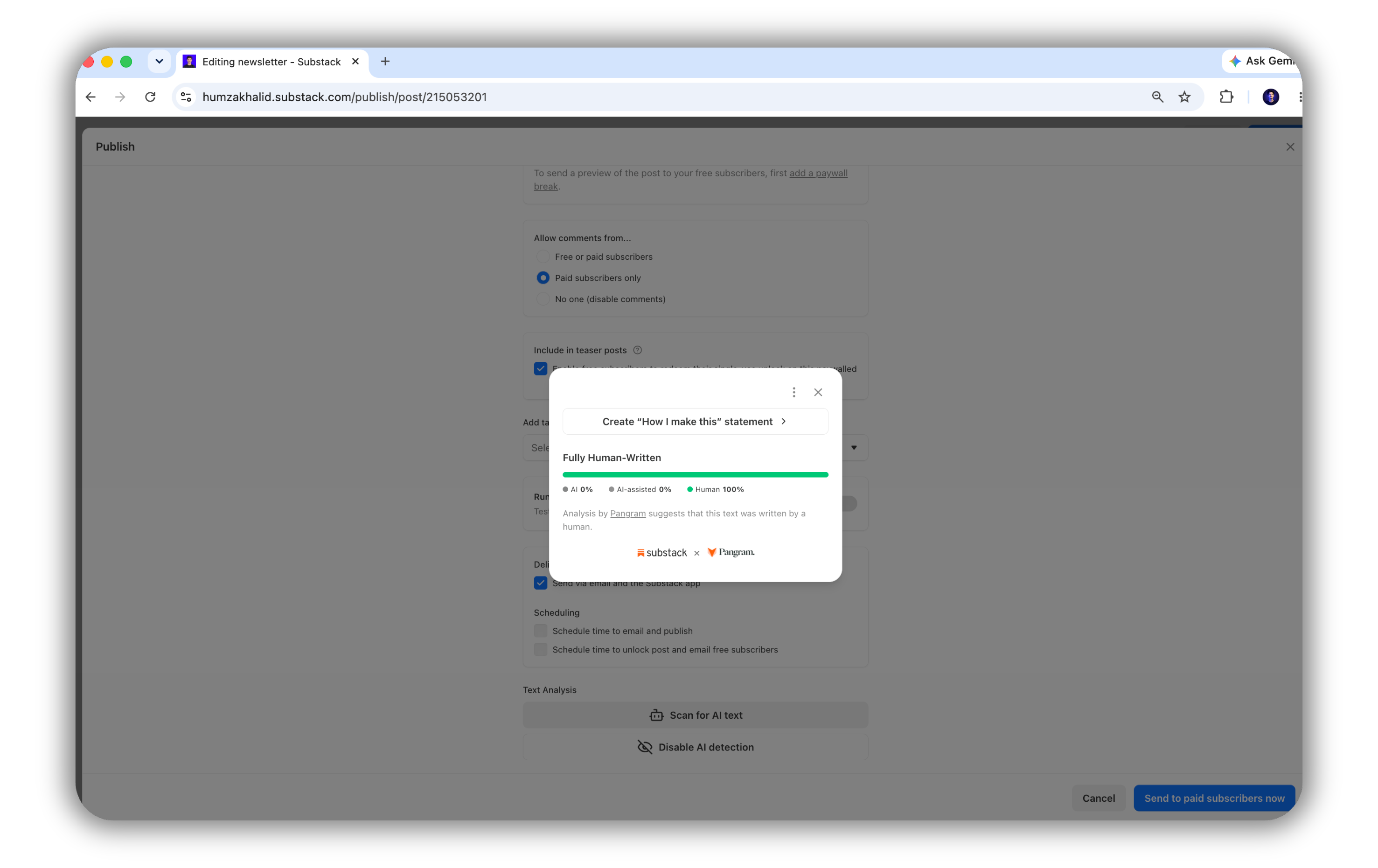
If you’ve been trying to get an article to pass, you’ll understand why.
Passing an entire article is huge.
If this has helped you, I’d be grateful if you’d pass it on to others who are getting ready to publish a long text.
Where This Gets You
In 60 Seconds:
Short-form writing is easy to get past the AI detectors. Longer-form writing is much harder.
Human writing gets flagged as AI-written due to em dashes, other stylistic tics, and common phrases.
Using Claude’s humanizer helps, but is inconsistent on its own. Layering on AntiAI sometimes helps.
Use a combo of StealthWriter, Claude’s humanizer, AntiAI, and other humanizers. Make sure to break up longer-form writing into sections.
If you get through, you’ll be able to post to Substack, X, LinkedIn, Medium, etc., and not get flagged as AI slop and get buried.
And with that, you’ve spent more time and energy avoiding AI detection than you’ve spent writing the piece itself. Enjoy.
Your Free Gift
I’ve gone through each chunk to figure out what makes them special, including certain words or phrases, sentence structure, micro-level writing habits, and so on.
Basically, stuff that can help you fool Pangram without raising suspicion. Also, the two skills that I used during this experiment.
I’ve put it all together in a Notion page.
And now that our public trial is over, I encourage you to use it in private.
Take 10 seconds to send this to someone who is a creator on any platform and wants to remove the AI Slop.
PS - You’ll get more out of these findings if you use them before humanizing with tools. Not after.
Let me know your worst AI detector horror stories. I’ll be reading all of them.
- Hamza💙