

Open Claude. Blank box. Type. Read. Copy it somewhere else. Close the tab.
That’s the 10%. It’s what almost every business owner does with it, every day.
The other 90% is instructions that run before every conversation, containers that hold your business context permanently, memory that carries across sessions, packaged workflows that fire on their own, live connections into the tools you already pay for, and jobs that run while you sleep.
None of it is hidden.
How to Use Claude Better Than 99% of People

You are sitting on a Ferrari and driving it like a bicycle.
By the end of this issue, you’ll have the Automation Audit worksheet and my full Custom Instructions block, ready to use tonight.
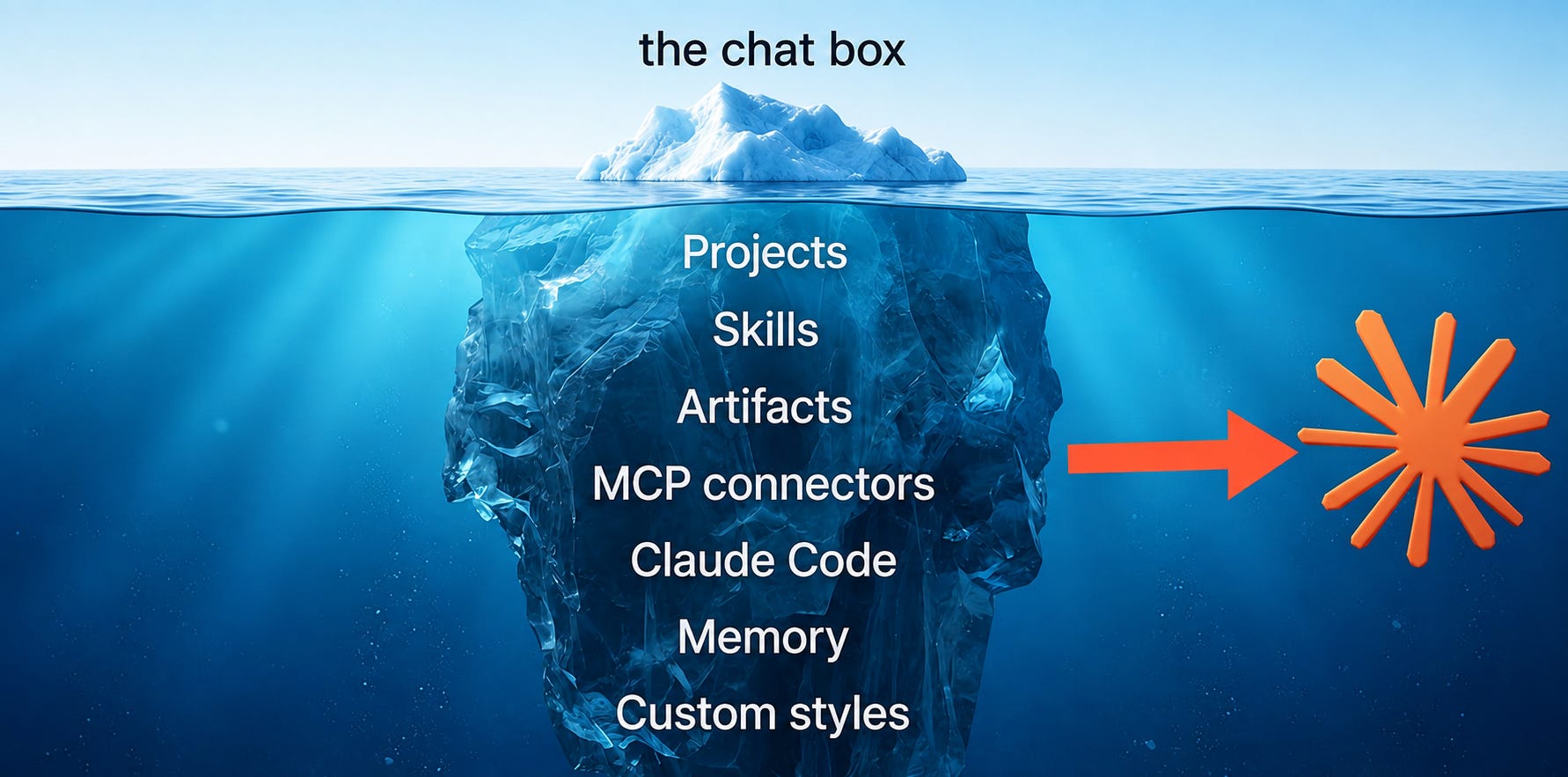
Most business owners spend between two and four hours a day on admin.
Email, approvals, chasing updates, pulling reports, re-entering data that already exists somewhere else.
Two hours a day across a working year is roughly 500 hours.
You already know this. You’ve probably already tried to fix it with AI, got something half-working, and quietly stopped using it around week three.
I did too. Last year I spent about six weeks building automations around a content process that didn’t work when I ran it by hand. Every automation I built made the mess arrive faster.
The Ladder Almost Nobody Climbs
There’s a ladder from that blank chat box to a system that runs without you. Seven rungs.
Level 0 is where 99% of people live.
You type, it answers, you leave. No memory of you, no context about your business, nothing reusable.
Every conversation starts from zero, which means you pay the explanation tax every single time you open it.
Levels 1 through 7 are where Claude stops being a chatbot and becomes infrastructure. You set instructions that run before every conversation.
You give each function its own room. You let it remember you. You package your best prompts so they fire automatically. You plug it into the tools your work already lives in. Then you stop asking and start delegating.
Every rung takes about twenty minutes and pays back over months rather than instantly. That’s the entire reason almost nobody climbs it.
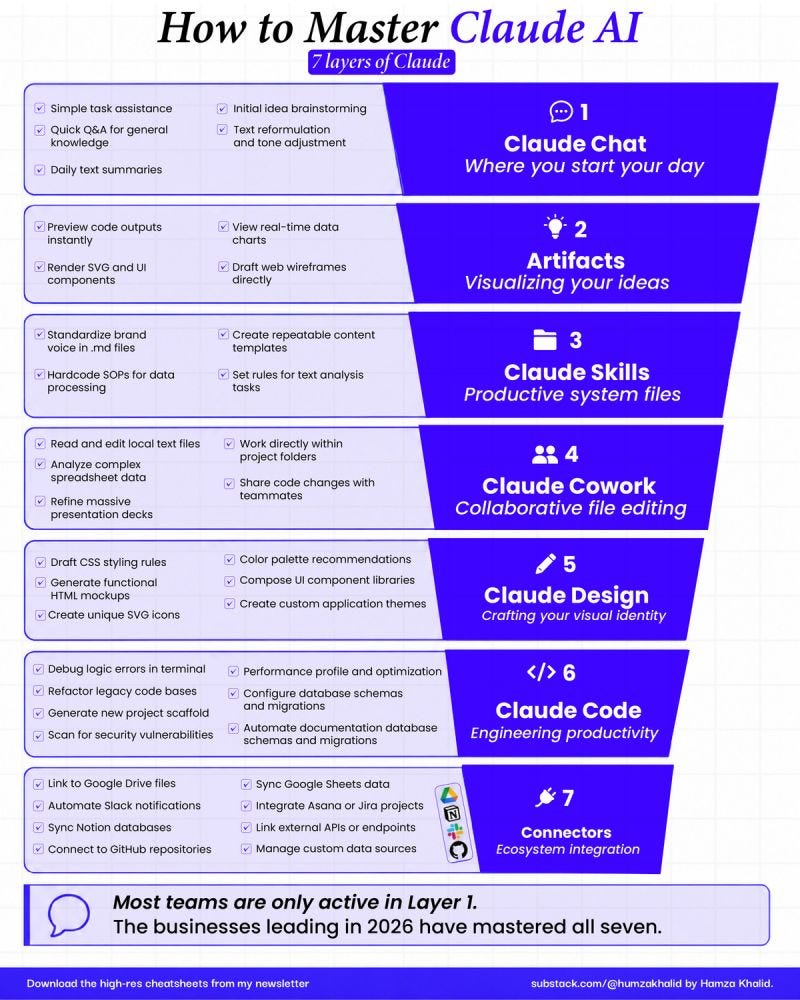
Why most of this dies before rung two
The research on this is unusually blunt, and it’s worth knowing before you start.
Deloitte’s Tech Trends work this year found most organisations automate their existing processes instead of redesigning them.
Only around 11% have moved to genuinely redesigned, agent-first workflows. Everyone else made a broken process run faster.
McKinsey’s agentic AI research found that among pilots that stall, roughly 61% of failures trace to governance and direction rather than model capability. Deloitte’s State of AI work points at skills, not compute.

The Forbes analysis in July was direct about it: the businesses that succeed are the ones automating repetitive, well-documented processes.
Well-documented is doing all the work in that sentence.
Claude is not your bottleneck. It hasn’t been for a while.
The nine bottlenecks and the rung that clears each one
Read this first. Find yours. Then read only what applies.
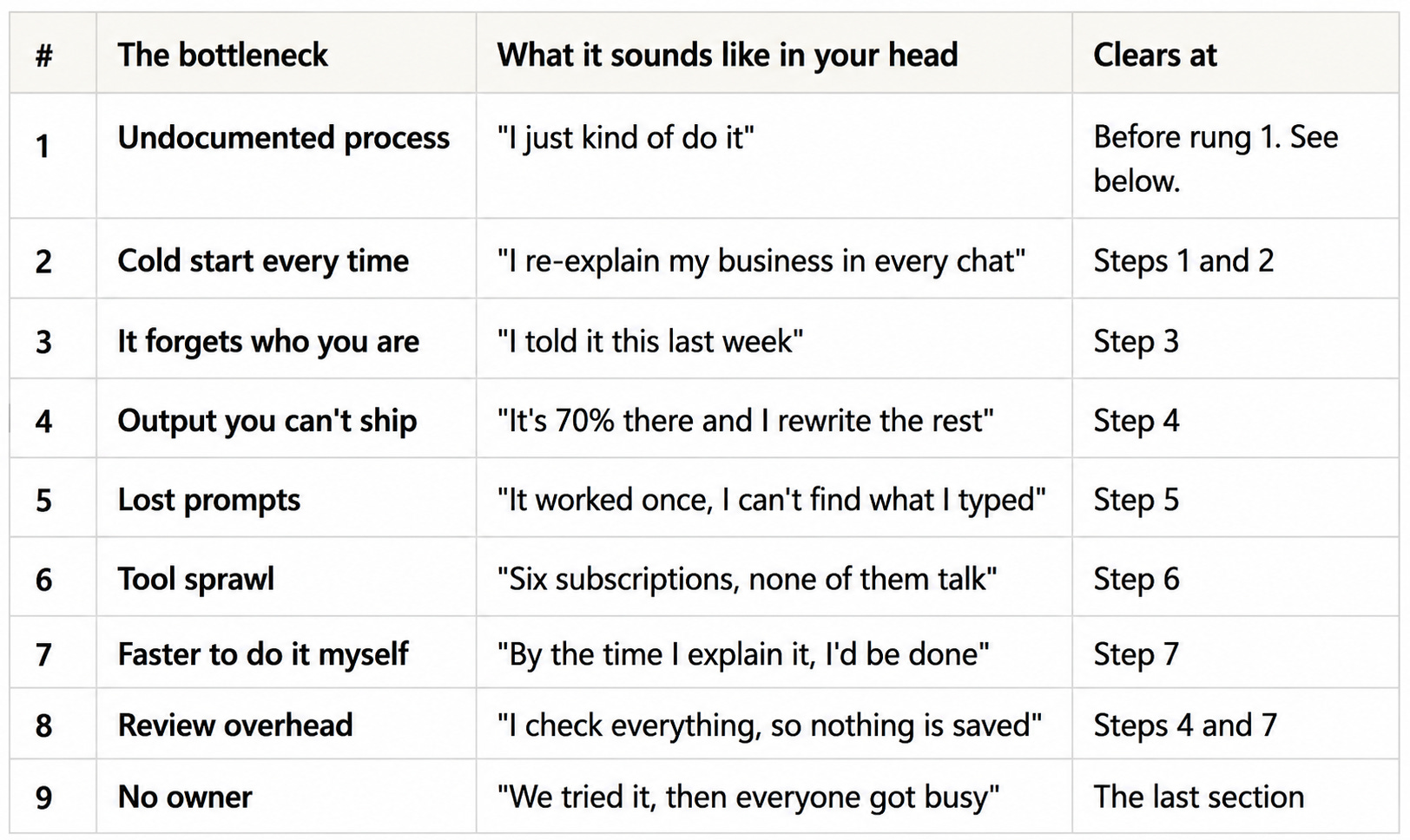
Bottleneck 1 has no rung, because it happens before Claude opens. Here’s the fix, and it takes twenty minutes.
Pick the task that annoys you most.
Run it manually once, and narrate every decision into Claude as you go.
Not the clean version. The real version, including the part where you check the client’s last invoice before deciding the tone of the email.
Then paste this:
I just described how I actually do this task, including
the messy parts. Write it back to me as a numbered
process document.

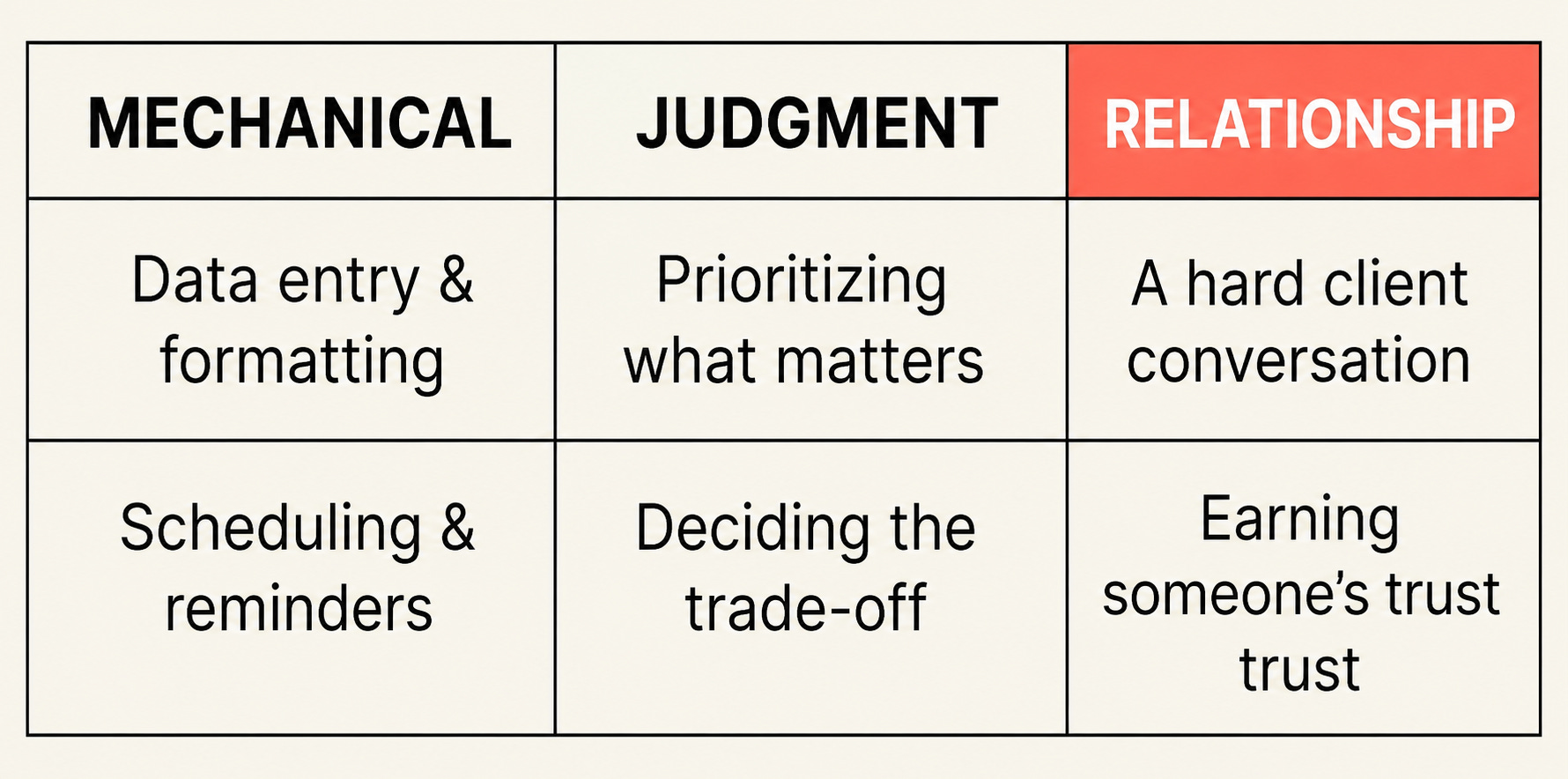
For each step, mark it as one of:
- MECHANICAL (same every time, no judgment needed)
- JUDGMENT (I decide based on context)
- RELATIONSHIP (a person needs to feel something)

Then tell me which MECHANICAL steps could run without
me at all, and flag any step where my description was
vague enough that you'd have guessed.“Flag any step where my description was vague“ is the line that saves you six weeks. The vague steps are exactly the ones your automation gets wrong, and you won’t notice until it’s been wrong for a month.
Automate the mechanical. Assist the judgment. Never automate the relationship.
If this is useful, forward it to one business owner who's already tried and given up. Takes 10 seconds.
Anthropic publishes a full guide on how their models want to be instructed. Most people have never opened it.
→ docs.claude.com/en/docs/build-with-claude/prompt-engineering/overview
I’ve pulled the parts that change business output into Step 4. Skip the rest unless you enjoy that sort of thing.
Old way:
Open chat → re-explain your business → get a generic answer → rewrite most of it → close the tab → repeat tomorrow.
New way:
Claude already knows your business → already has your files → already has your rules → produces something you send instead of something you fix.
Ninety minutes of setup separates those two.
You Now Know The Ladder Exists. Below The Line Is How You Climb It.
All seven steps in full - the Custom Instructions block, the Projects, the skill build, the connectors, the scheduled tasks that run while you sleep. Plus the Automation Audit worksheet and the sorting template.
Free readers stop here with a good idea. Paid readers close this tab with a system that runs without them.
HOT OFFER
For the next 14 days, founding members get in for $200 instead of $300 - 33% off, locked in for life.
