$10,000.
If you're reading this, you probably already use Claude.
You've saved yourself hours.
Maybe you've built something small.
But you haven't earned anything from it yet - not real money, not consistently.
By the time you finish this issue, that stops being about capability and starts being about decision.

I’ve been studying how people hit this number with AI - and the ones who get there aren’t building apps.
They’re following a sequence so simple it almost sounds wrong.
service → system → software
I didn't start here.
My first AI project was a Chrome extension I spent six weeks building.
I launched it to 47 downloads.
Zero dollars.
Then I did one consulting call for a local business - used Claude to build their lead response system - and charged $1,200.
That was in a single afternoon.
I haven't launched a free tool since.
The system I use to deliver client work faster than anyone expects is ClaudeKit - 121 slash commands and 25 skills built specifically for Claude Code. One of those kits is MarketingKit. It’s the one I reach for when a client needs content, newsletters, or outreach. Type /mkt-newsletter and the structure is already there. No re-explaining. No setup from scratch every session. → Get MarketingKit
The sequence most people skip
Here’s how most people approach AI income:
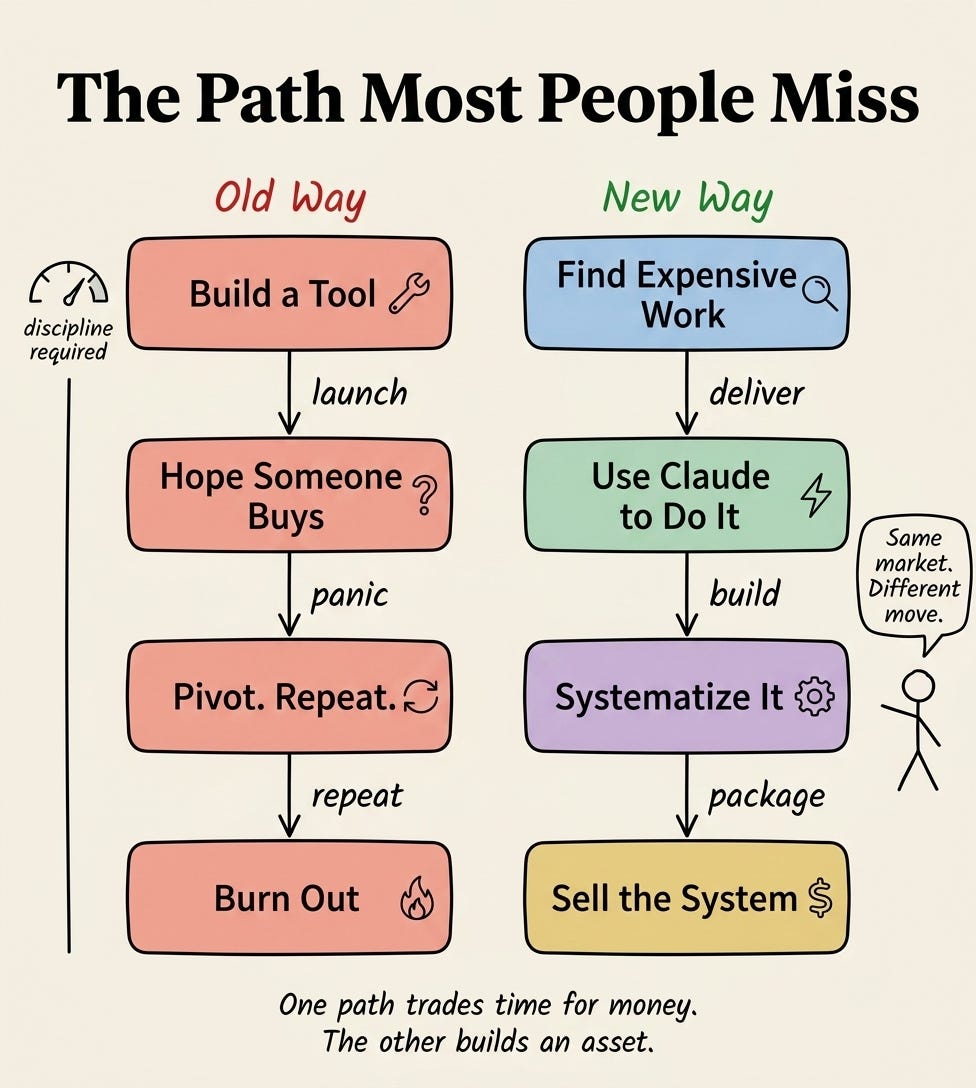
Old way: Build tool → Launch → Hope someone buys → Pivot → Repeat → Burn out.
New way: Find expensive work → Deliver it with AI → Systematize the delivery → Sell the system.
The math is simple. You need $10,000/month. That’s:
10 businesses paying $1,000/month
20 clients paying $500/month
Or 1 retainer at $5K + a subscription product doing the rest
None of those numbers require viral reach.
They require a result that someone already pays for.
I used to think I needed 200 customers to make real money with AI.
Then I realized: I just needed 10 businesses who had a $1,000 problem I could solve with a $200 tool.
The math isn't complicated.
The discipline to stay in math is.
If this is useful, share it with one person building on AI right now. It takes 10 seconds.
Step 1: Find the expensive problem
Don’t start with an app idea.
Start with work that a business already pays someone else to do.
Accounting. Lead follow-up. Compliance reporting. Customer support triage. Proposal writing. Social content for local businesses. Invoice chasing. Research briefs for law firms.
The test is simple: if a business currently has a human doing this job and that human costs $3,000–$15,000/month, you have a candidate.
Quick setup:
List 10 industries where you've ever been paid - jobs, freelance, family business. You're not picking a niche. You're mining for a problem you already understand.
For each industry, name one task an employee spends 10+ hours/week on
Cross off anything that requires physical presence or licensed professional judgment
You now have your shortlist
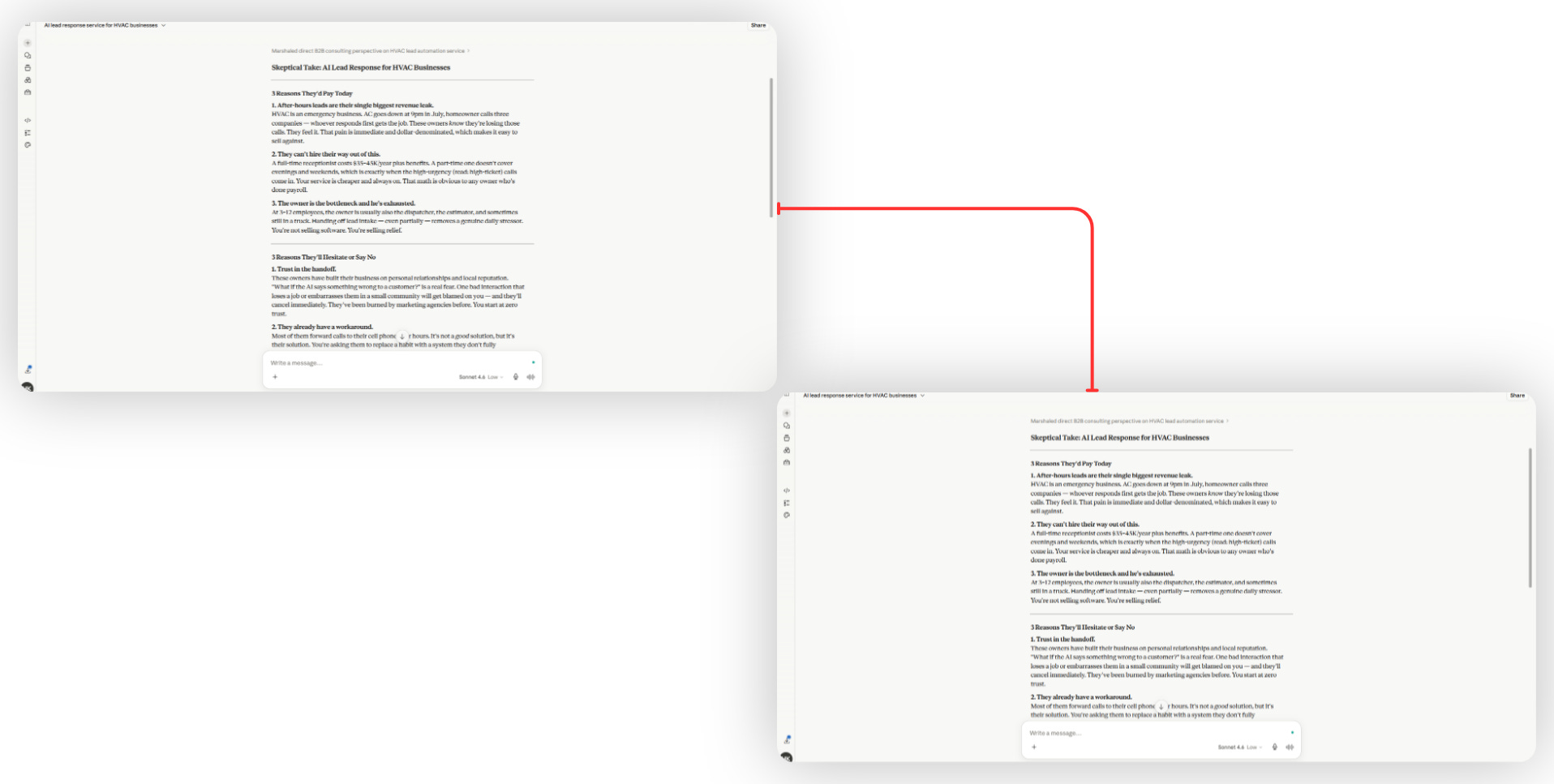
Use this Claude prompt to pressure-test your idea before you build anything:
You are a skeptical B2B consultant with 15 years of experience in service businesses.

I'm considering offering this service using AI automation:

"[Paste your service idea in one sentence]"

Target customer: [describe the business type and size]

Do the following:
1. Name 3 reasons this customer would pay for this result today
2. Name 3 reasons they might hesitate or say no
3. Estimate a realistic monthly price range for this service (low / mid / high)
4. Tell me the one biggest risk of delivering this at scale

Be direct. Don't sugarcoat.
Be direct. Don’t sugarcoat. This line matters. Without it, Claude gives you an optimistic pitch deck. With it, you get the honest version you need.
Step 2: Sell the result before you build
Here’s where most people get it wrong.
They spend 6 weeks building. Then they try to sell.
Flip it.
You sell a paid pilot first.
Three clients at $500–$2,000 each. You manually deliver the result using Claude and whatever tools you already have.
You don’t automate yet. You just do the work and get paid.
This does two things:
Proves someone will pay before you invest months building
Shows you exactly where the bottlenecks are before you systematize
A home service company example: you offer to manage their after-hours lead responses for 30 days. $1,500 flat. You use Claude to draft responses, and you review and send. You log every edge case.
After 30 days, you have the data to build a real system.
Quick setup:
Write a one-sentence offer that names the result
Contact 5–10 businesses via LinkedIn DM or email - ask for 15 minutes
Present the pilot in the call: I’ll handle [X] for 30 days. If you don’t see a result, you don’t pay.
Deliver it manually with Claude. Document every step.
Use this prompt to write your outreach:
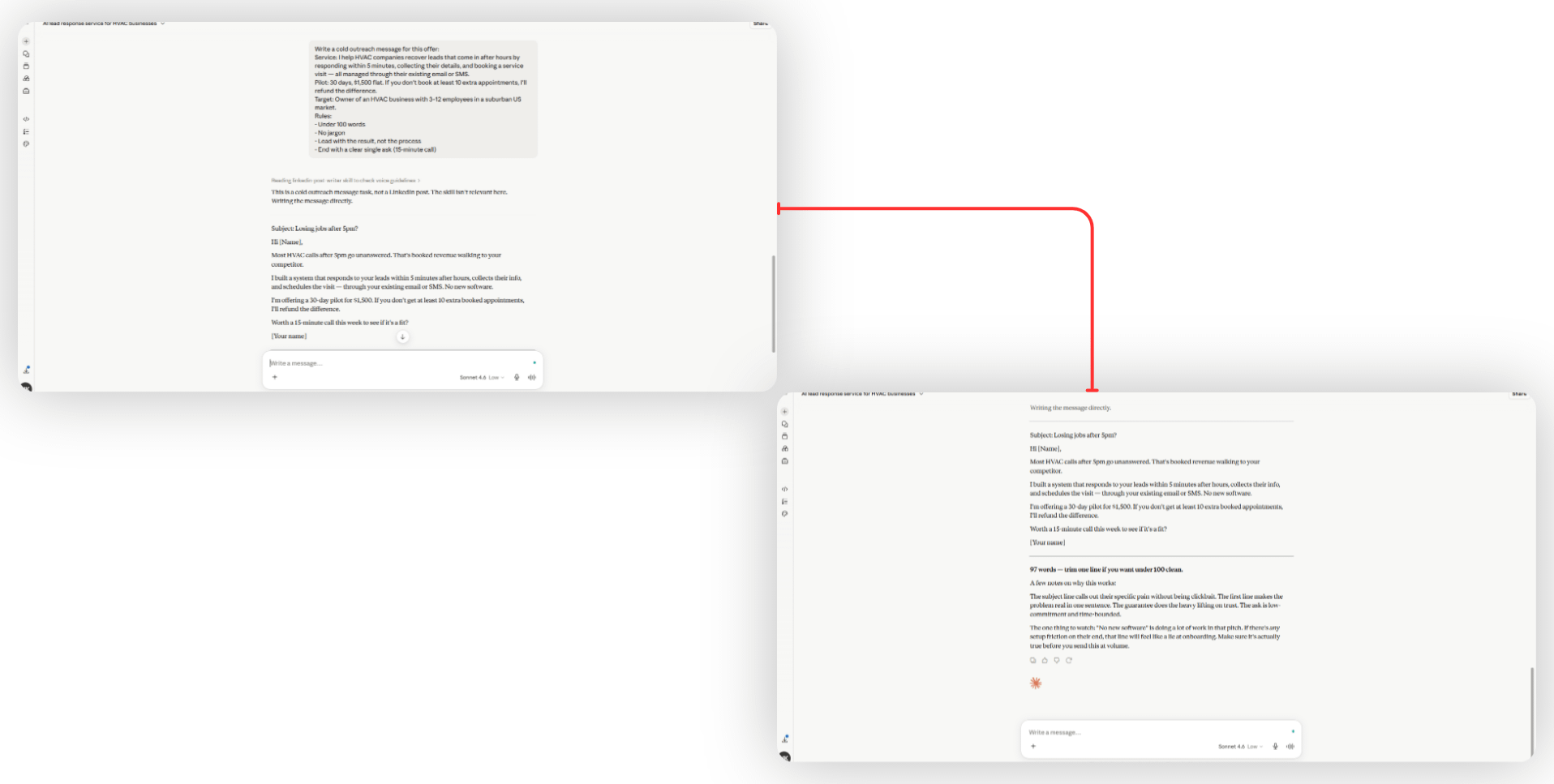
Write a cold outreach message for this offer:

Service: I help [home service companies] recover leads that come in after hours by responding within 5 minutes, collecting their details, and booking a visit — all managed through your existing channels.

Pilot: 30 days, $1,500 flat. If you don't book at least 10 extra appointments, I'll refund the difference.

Target: Owner of a [plumbing/HVAC/electrical] business with 3–15 employees.

Rules:
- Under 100 words
- No jargon
- Lead with the result, not the process
- End with a clear single ask (15-minute call)
This prompt works because it forces Claude to lead with the result - 10 extra appointments - not with the technology. Buyers don’t care that you’re using AI. They care about the outcome.